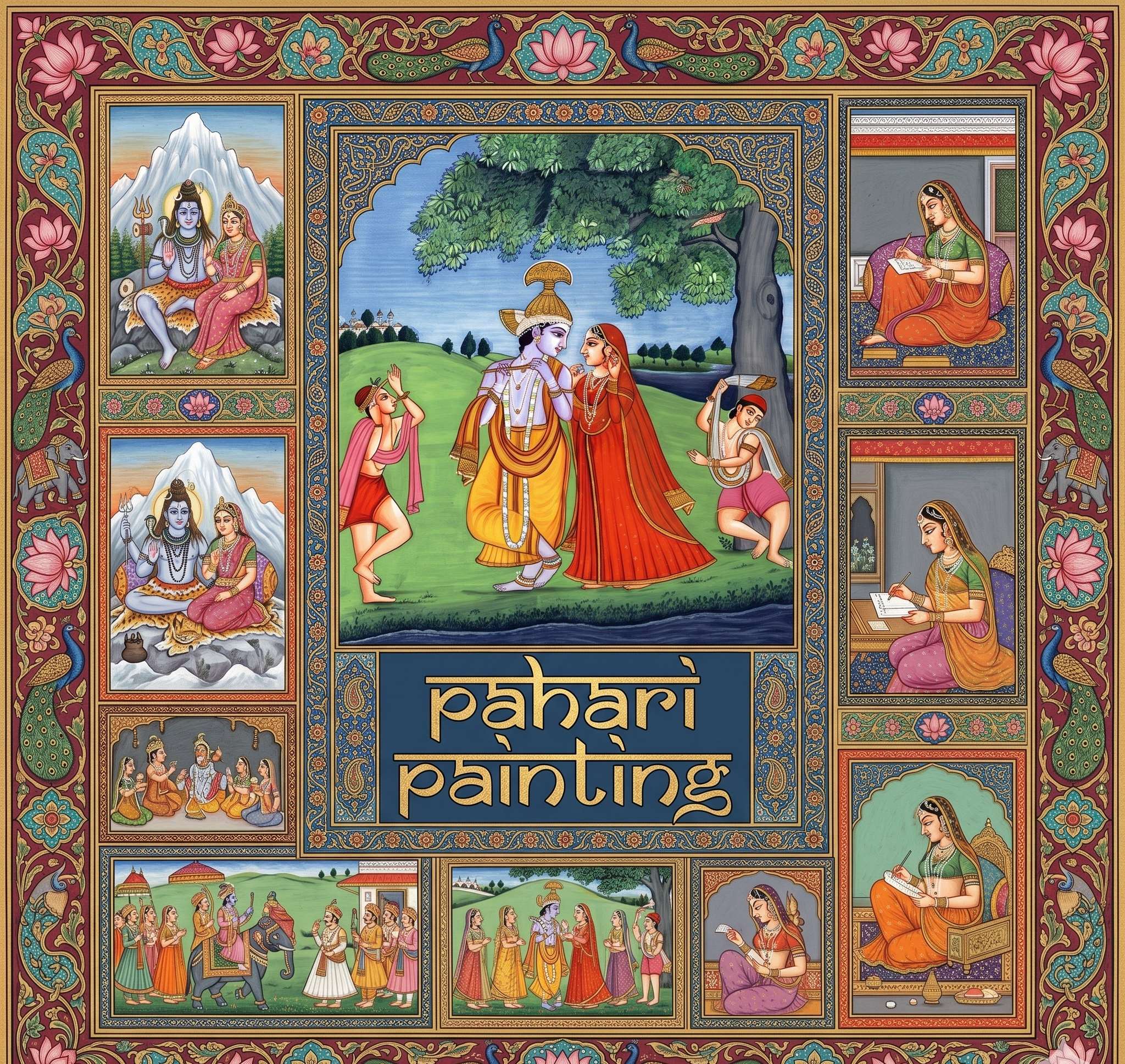
A Journey Through the World of Pahari Painting
The hills and valleys of Himachal Pradesh and Uttarakhand once comprised a group of small Rajput states that produced some of the finest Indian paintings between the seventeenth and early nineteenth centuries. In these regions, artistic excellence was not only encouraged but also refined over generations.
Pahari painting, a significant form of Indian miniature painting, was developed through exceptional skill and innovation. Although its early influences can be traced to the Rajput courts of Jodhpur and Bundi, the style was eventually shaped in the smaller hill kingdoms of the Himalayas.
Over time, a distinct artistic identity was formed, where spirituality, nature, and storytelling were brought together through delicate lines, soft colours, and expressive compositions.
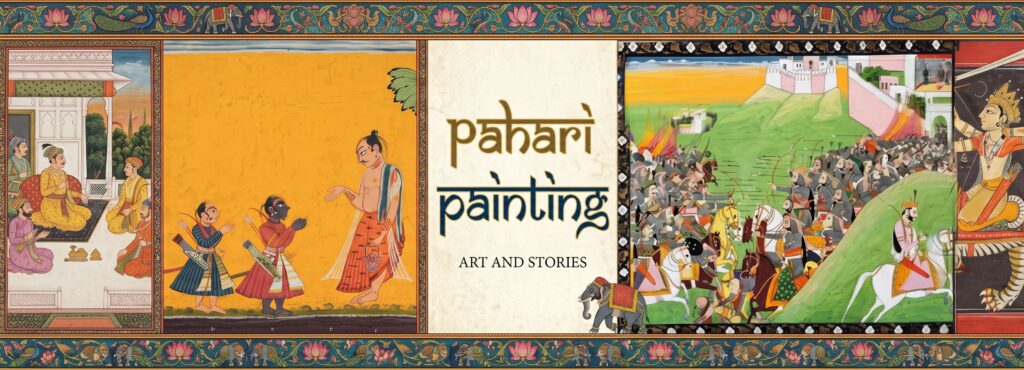
What is Pahari Painting?
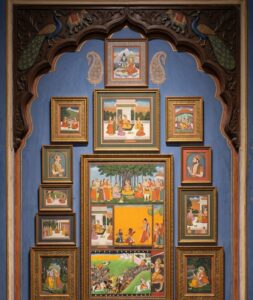
The term “Pahari” translates to “from the mountains.” It is used to describe paintings that were created in the hill kingdoms such as Basohli, Guler, Kangra, Chamba, Nurpur, Bilaspur, Mandi, Kullu, and Garhwal.
Although each region developed its own variation, these styles were collectively grouped under the Pahari school of painting. Therefore, Pahari painting is not a single style but a family of closely related artistic traditions.
Also Read: The Art Of Pen and Ink Drawings
A Brief History of Pahari Painting
-
Mughal Influence and the Rise of Miniatures
The art of miniature painting in India was significantly shaped during the Mughal period. When Humayun was exiled to Persia, Persian miniature painting was encountered by him. Later, in 1555 CE, Persian artists were brought to India, and a new artistic phase was introduced.
-
Decline of Mughal Patronage
However, a major shift occurred during the reign of Aurangzeb in 1658 CE. Since art was not encouraged under his rule, royal patronage declined.
Consequently, many painters were forced to leave the Mughal court. In search of new opportunities, they migrated to different regions of India.
-
Migration to Hill Kingdoms
As these artists moved across the country, many of them found patronage in the Rajput courts and eventually in the hill kingdoms of the Himalayas.
Thus, Pahari painting emerged as a result of this migration.
-
Evolution
The development of Pahari painting can be understood as a gradual evolution rather than a sudden emergence.
Initially, bold and intense compositions were created, especially in the Basohli style, where strong colours, dramatic expressions, and stylised forms dominated
Then, softer and more naturalistic styles were introduced, particularly in Guler, where Mughal influence led to greater attention to realism, proportion, and subtle detailing
Finally, highly refined and lyrical forms were achieved in the Kangra style, where grace, emotional depth, and delicate compositions became central
As a result, this transition reflects not only a stylistic shift but also a deeper movement toward emotional expression and visual harmony.
Major Schools of Pahari Painting
-
Basohli School: The Bold Beginning
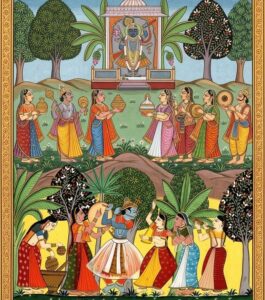
The Basohli style is considered the earliest phase. It is characterised by:
- Bright and striking colours
- Strong, bold outlines
- Intense and expressive faces
In addition, figures often appear stylised, and compositions feel energetic and symbolic.
-
Guler School: The Shift Towards Naturalism
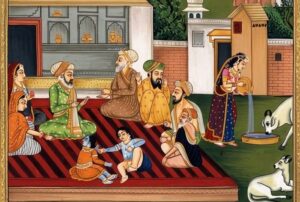
With time, a noticeable shift was introduced in the Guler school.
- Softer colour palettes were used
- Human figures became more natural
- Expressions were made more subtle
This change was influenced by Mughal realism, and therefore, a more refined visual language was developed.
-
Kangra School: The Peak of Elegance
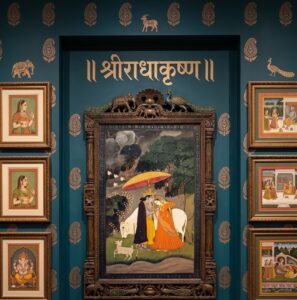
The Kangra style is regarded as the most mature and refined phase of Pahari painting.
- Delicate lines and soft tones were emphasised
- Landscapes were made lush and detailed
- Emotions were expressed with sensitivity
As a result, themes of love, devotion, and nature were depicted with lyrical beauty.
-
Other Regional Styles
In addition to these major schools:
- Chamba focused on decorative richness and local elements
- Garhwal developed graceful compositions inspired by Kangra
- Mandi and Kullu retained more folk influences
Thus, regional diversity added depth to the overall Pahari tradition.
Themes in Pahari Paintings
Pahari paintings are known for their strong narrative quality. Several themes were consistently explored.
-
Mythology and Religion
Stories from Hindu texts such as the Ramayana and Bhagavata Purana were frequently illustrated. These works were created not only for aesthetic purposes but also for devotion.
-
Radha and Krishna
The most prominent theme is the love of Radha and Krishna. Their relationship was depicted as both romantic and spiritual.
Through these compositions, divine love and emotional depth were expressed.
-
Ragamala and Barahmasa
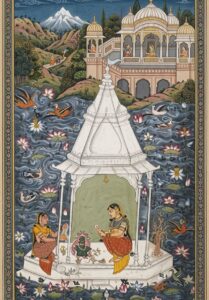
Ragamala paintings visually represented musical modes
Barahmasa paintings depicted the twelve months and changing seasons
In both cases, human emotions were linked to time, music, and nature.
-
Court Life and Daily Scenes
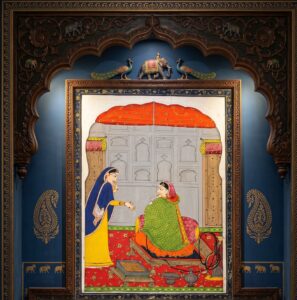
Scenes of royal life, celebrations, and daily activities were also portrayed. These added a worldly dimension to the art.
Key Artistic Features of Pahari Painting
Several visual elements define the uniqueness of Pahari paintings.
-
Human Figures
Figures are usually graceful and proportionate. Common features include:
-
Curved foreheads
Small, expressive eyes
-
Elegant body language
Moreover, multiple figures are often included, yet each is given individual attention.
-
Use of Colour
Natural pigments were used, which were derived from minerals and plants. Because of this, colours appear luminous and rich.
Soft tones are more common in later styles, while earlier works use brighter contrasts.
-
Nature and Backgrounds
Nature plays an essential role in Pahari paintings.
Hills, rivers, and trees are carefully detailed
Birds and animals are often included
Landscapes reflect the beauty of the Himalayan region
Therefore, the background is not passive but actively contributes to the composition.
Technique and Composition
Fine lines, balanced layouts, and careful detailing are consistently observed. Over time, the technique became more refined, leading to greater harmony and elegance.
Evolution of Style and Technique
Pahari painting evolved continuously across time.
- Early works were bold and dramatic
- Later works became soft and expressive
- Mughal influence introduced realism and precision
Thus, the style moved from intensity to subtlety, without losing its emotional depth.
Notable Artists of Pahari Painting
-
Nainsukh
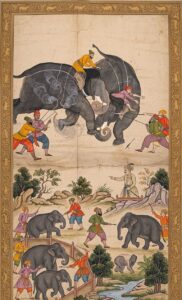
Nainsukh is one of the most important painters of this tradition. His work is known for realism and attention to everyday life.
Unlike earlier stylised works, his paintings feel intimate and human.
-
Manaku
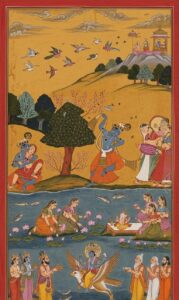
Manaku, often associated with Nainsukh, contributed significantly to narrative painting. His work combines boldness with storytelling depth.
-
Family Lineages of Artists
Pahari painting was often practiced within families. Skills and techniques were passed down across generations.
As a result, continuity and consistency were maintained within the tradition.
Why Pahari Painting Matters Today
Even today, Pahari painting continues to be appreciated for its beauty and depth.
- It preserves regional history and culture
- It reflects a blend of Mughal and local traditions
- It offers insight into spiritual and emotional expression
Moreover, it continues to inspire modern artists, designers, and collectors.
Final Thoughts
Pahari painting represents a remarkable chapter in Indian art history. Emerging from the hill kingdoms of North India, it was shaped by migration, patronage, and creativity.
While its roots lie in miniature painting traditions, it developed into a unique style marked by elegance, emotion, and harmony.
Ultimately, Pahari painting is not just an art form. It is a visual expression of culture, nature, and devotion, brought together through refined skill and timeless imagination.
Giftex: Modern and Contemporary Art Auction
This April, Giftex brings back its Modern Indian Art Auction. Discover masterpieces and rare treasures that celebrate India’s culture and artistic legacy. Explore exceptional masterpieces and uncover rare treasures.


About Post Author