The Timeless Beauty of French Gilt Bronze Clocks
In today’s digital age, it is easy to tell the time with just a glance. Mobiles, tablets, smart watches and many more devices help us to keep track of every second conveniently.
In the old days, before digital technology, clocks were regarded as one of the greatest inventions that not only offered practicality but also showcased style, craftsmanship, and social status.
A staple of the French decorative arts in the 18th and 19th centuries, antique French clocks occupy a vital role in the history of decorative arts.
Amongst the various clocks created during this period, antique French clocks in gilt bronze, marble and porcelain are a very essential part of French artistry.
The French gilt bronze clock is particularly noteworthy for its remarkable appearance and elaborate manufacturing.
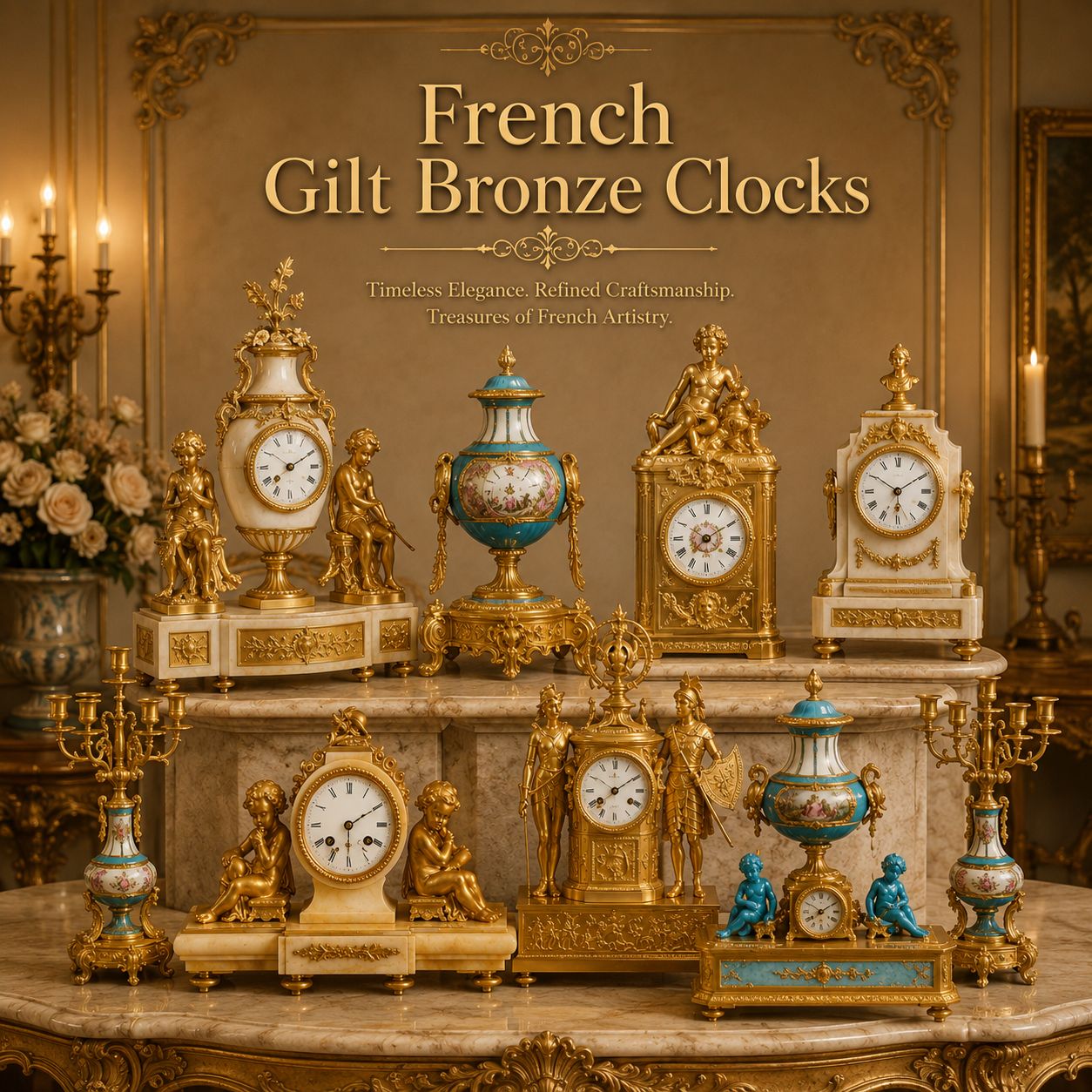
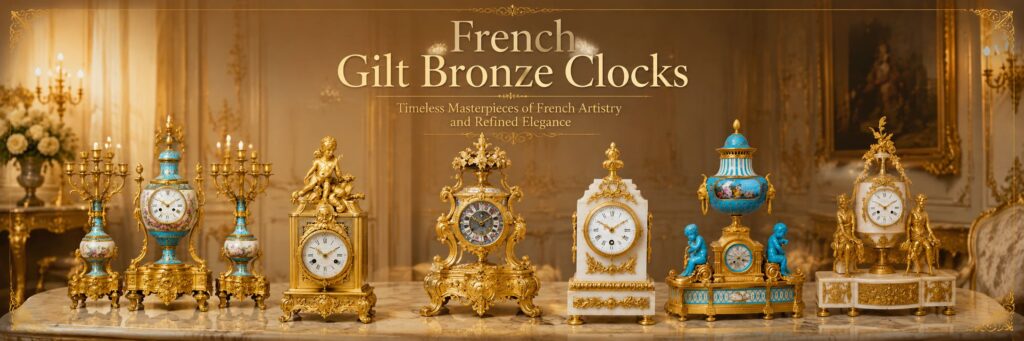
French gilt bronze clocks (ormolu) are masterworks of horology and decorative art that were initially used by royalties and aristocracy.
This guide explores the history, design, and different types of French gilt bronze clocks while highlighting why they remain highly sought after in the world of antiques and decor.
What Are French Gilt Bronze Clocks?
French clockmaking reached its zenith in the 17th century, characterised by unique design and exceptional artistry. This was when the highly ornamented clocks, covered in gilt bronze, known as ormolu, were popular. These clocks were produced to keep pace with the new standards for opulence set by King Louis XIV’s Palace of Versailles.
These gilt bronze clocks of France embody the intersection of functional objects and bronze sculpture. These gilt bronze clocks were often a combined effort between clockmakers, who were responsible for the mechanical movements that allowed a clock to tell time, and craftsmen, who designed and built the decorative cases.
The History and Evolution of French Gilt Bronze Clocks
Origins: 17th Century
The history of French gilt bronze clocks dates back to the reign of King Louis XIV. Early French clock cases were often crafted from ebony, tortoiseshell, and highly ornamented brass (Boulle work, a decorative technique widely associated with the celebrated cabinetmaker André-Charles Boulle.
Rococo Period: 18th Century
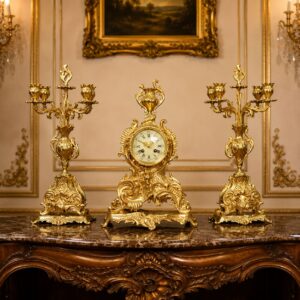
With the accession of King Louis XV, clocks were fully decorated with gilt bronze. The Rococo era was known for works that embraced fluid movement, asymmetrical forms, and elaborate decorative details.
Explore Rococo Sculptures & Figurines
Neoclassicism and Empire Period: Late 18th – Early 19th Centuries
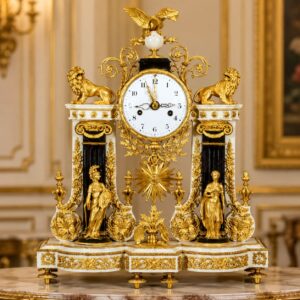
The rediscovery of ancient Greek and Roman artefacts and culture led to the Neoclassical era. The demand for French gilt bronze clocks reached its peak during the Empire period (1804–1815) under Napoleon Bonaparte.
French gilt bronze clocks celebrated military victories, mythology, heroism, and imperial power through dramatic decorative themes.
The 19th Century Expansion
During the 19th century, French clockmaking expanded rapidly as decorative clocks became more accessible to wealthy upper-middle-class households.
Today, antique French gilt bronze clocks from the 18th and 19th centuries remain highly valued by antique collectors and interior designers worldwide.
Design Features of French Gilt Bronze Clocks
French gilt bronze clocks are admired for their exceptional artistry and intricate details.
- Ormolu Gilding
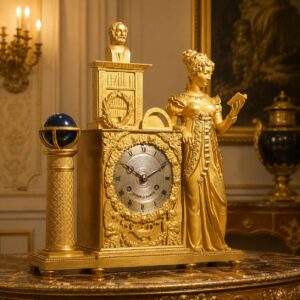
One of the most distinctive features of French gilt bronze clocks is ormolu.
Ormolu is known as gilt bronze in English and bronze doré in French. Although it is stunning, it is also highly durable.
This technique involves applying finely ground gold to bronze surfaces using mercury gilding methods.
The result is a rich golden finish that enhances decorative details and gives the clock a luxurious appearance.
Also Read: The Opulence of Ormolu in Decorative Arts
- Intricate Sculptural Elements
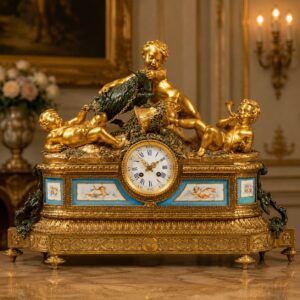
French gilt bronze clocks frequently featured sculptural decorations. Common motifs include:
- Cherubs and angels
- Floral garlands
- Roman gods and goddesses
- Animals such as lions and swans
- Musical instruments
- Classical urns and columns
- Marble and Porcelain Accents
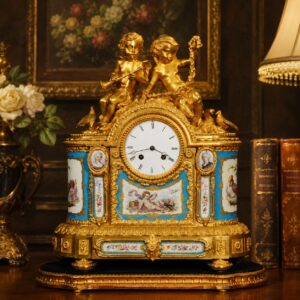
Many French gilt bronze clocks incorporate marble or porcelain into their design. Some popular marbles used were the white Carrara marble, black marble, rouge marble, and green marble. These were paired with gilded bronze to create elegant contrasts.
- Precision Clock Movements
French clockmakers were celebrated for producing reliable and accurate mechanical movements.
Most antique French clocks feature eight-day movements, meaning they only require winding once a week.
Types of French Gilt Bronze Clocks
French gilt bronze clocks come in many styles and forms.
- Figural Mantel Clocks (Pendules au Bonze)
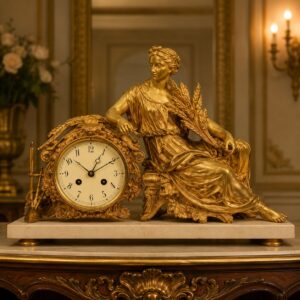
A French mantel clock is a decorative mechanical clock designed to sit on a mantel or shelf.
- These highly sculptural clocks feature detailed gilt-bronze figures as the main focal point. Mythological Themes: Common themes depict Roman gods, muses, cupids or allegories of love, time, and agriculture.
- Genre Scenes: Clocks showcasing figures of scholars, historical poets, or classical maidens.
- Cartel Clocks
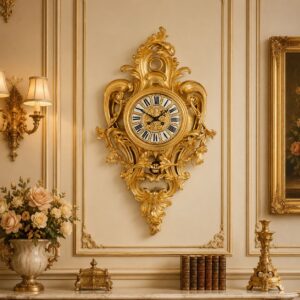
Cartel clocks are wall-mounted clocks known for their elaborate gilt bronze cases. A cartel clock’s size provides a clue to its intended placement: small and delicate clocks were often hung in alcoves, whereas larger ones were destined for more prominent locations where they could be fully admired.
One of the many makers of these sorts of clocks was Frederick Japy, whose firm Japy Freres would become the leading French clockmaker in the 19th century.
- Portico Clocks
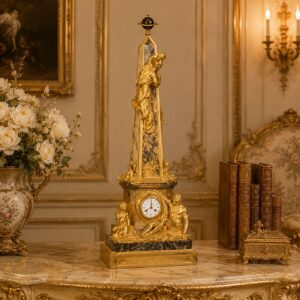
Portico clocks were heavily inspired by neo classical movement. These clocks mimicked classical temples and architectural structures.
- Portico Clocks: These feature a prominent top pediment supported by two or more marble or gilt-bronze columns.
- Obelisk Clocks: Shaped like Egyptian obelisks, these were heavily popular during the Napoleonic Egyptian campaign.
- Empire clock
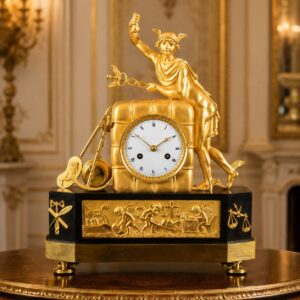
French Empire clocks represent one of the highest achievements in the decorative arts of early 19th-century Europe.
Following Napoleon’s proclamation as Emperor of the French, France entered a new cultural era known as the Empire period.
French Empire mantel clocks reflect the ideals of the time through their stately architectural forms, rich ornamentation, and use of precious materials.
- Rococo & Louis XV Clocks (Pendules Louis XV)
Crafted to complement 18th-century Rococo interiors, these clocks feature sweeping, asymmetrical, C-scroll motifs. They are heavily decorated with floral garlands, shells, and delicate acanthus leaves.
- Figural Clocks
Figural clocks incorporate sculpted human figures, mythological scenes, or historical subjects.
These clocks often depict classical heroes, philosophers, musicians, or romantic themes.
Why French Gilt Bronze Clocks Remain Valuable
French gilt bronze clocks remain highly prized in the antique market for several reasons.
- Exceptional Craftsmanship
The exceptional craftsmanship of these clocks, with their Ormolu gliding and durable finish that mimics solid gold, has elevated them to top-tier investment-grade antiques.
Because the process is historically labour-intensive and impossible to replicate via modern mass production, these clocks typically hold or appreciate in value.
- Historical Importance
These clocks reflect major artistic movements such as Rococo, Neoclassicism, and Empire design.
Owning a French gilt bronze clock is like owning a piece of European cultural history.
- Timeless Decorative Appeal
French gilt bronze clocks continue to complement both traditional and contemporary interiors.
Their elegant appearance adds sophistication, warmth, and character to any living space.
- Versatility Across Design Styles
Whether you are designing a classic, traditional, or even a sleek modern environment, antique French clocks provide a vital sense of grounding and history. The ornate, flowing curves of Rococo styles or the stately, symmetrical columns of Empire styles add a striking, high-contrast focal point.
- Rare and Collectible Nature
Authentic antique French gilt bronze clocks are becoming increasingly rare, especially pieces that retain their original ormolu gilding and mechanical movements.
Final Thoughts
French gilt bronze clocks bring history, art, and fine engineering together in one timeless object. More than simple timekeeping devices, they are masterpieces that showcase luxurious materials, exceptional ormolu work, and remarkable mechanical engineering. Whether you’re collecting or restoring, recognising the signs of quality can help you protect your investment and appreciate its story.
French gilt bronze clocks continue to stand as enduring symbols of sophistication, luxury, and timeless elegance.


About Post Author