The Art and Meaning of Kashan Carpet Patterns and Motifs
A Persian carpet is not just a floor covering. Each not, thread, and weave reflects centuries of tradition, regional identity, and symbolic meaning.
For antique collectors, interior decorators and historians, each Persian rug holds a deep story that reflects its origin, culture and heritage.
Persian carpets and rugs are primarily classified by their origin (city or tribe), which dictates their signature patterns, knot density, and materials. Amongst the most famous of these—and the pinnacle of classic elegance—is the Kashan carpet.
Persian Kashan carpets originate from the historic city of Kashan in central Iran. These carpets are renowned for their exceptional craftsmanship and elegance.
Intricate patterns, symmetrical designs, floral fields, classic medallions, and rich colour palettes distinguish these carpets from others.
This carpet guide will help you explore the history of Kashan carpets and understand their main motifs and symbolism.
Also Read: What Makes Persian Qazvin Carpets So Valuable
Origins and History of Kashan Carpets
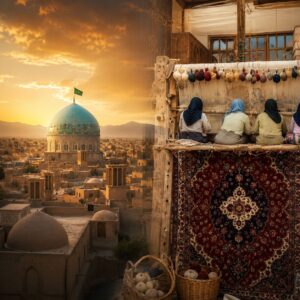
Kashan is an ancient city in Isfahan Province, central Iran, located in the northern foothills of the Karkas mountain range.
The city of Kashan has been a major centre for rug production for centuries. The Kashan weaving tradition is documented to at least the Safavid period (1501 to 1736), during which the city became one of the most important centers of Persian luxury textile production.
Kashan was a popular holiday retreat for the rulers of the Safavid dynasty. As such, the city offered the best of everything to its honoured guests. Even the textiles were made keeping in mind the status of the guests.
The Safavid court demanded the finest possible rugs for palace interiors, and Kashan weavers responded by developing exquisite textiles. These rugs gained international prominence in the 19th century and remain highly sought-after.
Classic Designs and Patterns
Certain design and pattern elements appear with great consistency across centuries of production.
- The Central Medallion Format
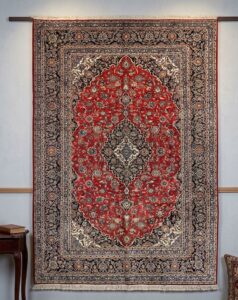
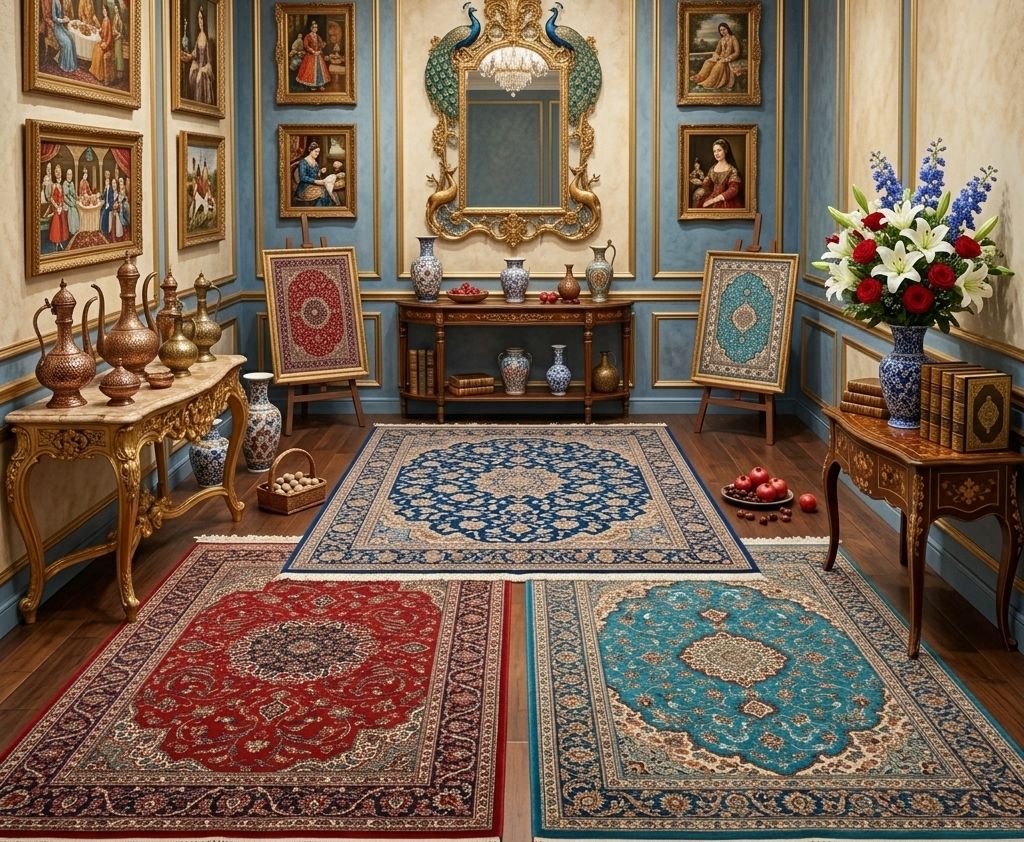
The most iconic and common Kashan composition features a central medallion. This medallion is then surrounded by a dense arabesque floral field, with corner quarter-medallions (called lachak) that mirror the main medallion’s design.
The medallion is typically oval or diamond-shaped and filled with elaborate palmette and arabesque motifs.
The field surrounding the medallion is covered with a continuous curvilinear vine system that spirals across the field.
- The All-over Pattern
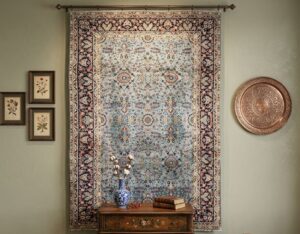
Instead of a central medallion, the carpet features an “all-over” grid of interconnected vines, vases, and blooming floral lattices. This grid of interconnected design visually extends indefinitely, representing the infinite nature of the cosmos.
This format appears in both historic and contemporary Kashan production and is particularly associated with certain antique pieces from the late 19th and early 20th century workshops.
- The Border System
The Kashan border is one of its most distinctive and consistently executed elements. A typical Kashan border consists of a wide main border flanked on both sides by narrow guard borders.
In fine Kashan production, the border design is engineered to turn precisely at the corners so that the border pattern reads continuously and seamlessly around the carpet.
- Shikargah (Hunting Scenes)
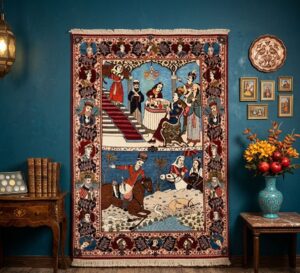
This is a rare but highly prized traditional pattern of Kashan carpets. The pattern depicts royal hunting scenes with warriors on horseback, leopards, and gazelles. The pattern symbolises courage, power, and the connection between humanity and nature.
Core Motifs & Their Hidden Meanings
The intricate motifs woven into Kashan carpets act as a rich and vivid visual language.
- The Shah Abbas Motif
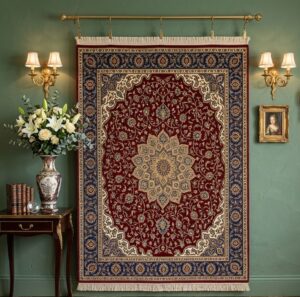
This intricate motif is named after Shah Abbas the Great, who patronized its development during the Safavid era.
The motif is typically a complex, curving palmette (often resembling a stylized lotus, sunburst, or blooming lily). It is usually surrounded by a fluid network of scrolling vines, creepers, and smaller flowers, radiating perfect four-fold symmetry.
In traditional Kashan weaving, these palmettes are often placed centrally in large medallions or scattered dynamically across the rug’s field and borders.
2. Arabesque (Eslimi)
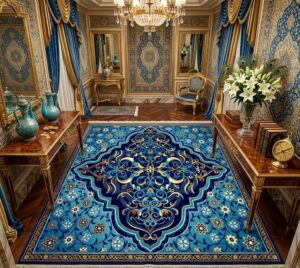
The Eslimi design represents the flowing, unbroken cycle of life and nature, serving as the connective tissue between the larger floral and medallion motif. These design appear as curvilinear, serpentine vines and branching stems that scroll and intertwine across the carpet.
- The Herati (Mahi) Pattern
Also known as the “fish” pattern, it consists of a central rosette or flower surrounded by a diamond shape, which is flanked by four elongated, serrated leaves.
It is traditionally believed to symbolize a pond teeming with fish swimming around a floating flower.
- Floral & Arabesque Fields
The background field (between the center and corners) is rarely empty. It is usually heavily populated with intertwining vines, palmettes, rosettes, and lotus blossoms.
- The Tree of Life
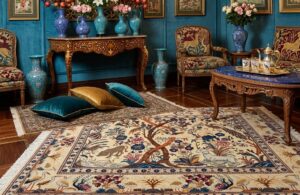
The Tree of Life is one of the most meaningful motifs in Persian rug design.
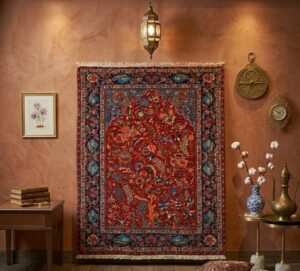
In Kashan carpets, the tree often rises vertically through the center of the rug and is surrounded by birds, flowers, and vines.
The Tree of Life symbolizes:
- Eternal life
- Spiritual growth
- Connection between heaven and earth
- Renewal and wisdom
- Vase and Garden Motifs
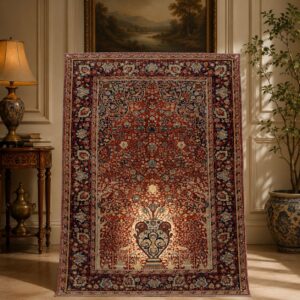
Vase (Kandili): Many Kashan rugs feature a grand, ornate vase from which floral sprays burst forth, usually placed at the base of the carpet.
Garden: Some carpets are partitioned into geometric or stepped garden grids, with each block depicting a style.
The Kashan Colour Palette
Kashan rugs are famous for their rich, deep backgrounds—most notably striking red and navy blue, often framed by ivory or contrasting blue borders.
- The Classic Palettes (Red & Blue Dominance)
- Ruby Red and Navy Blue: This is the most iconic and recognizable Kashan colour scheme. Weavers frequently use a luminous ruby-red or burgundy base field contrasted by a dark navy or midnight-blue border, or vice versa. The colour is extracted from madder root, which produces a range of reds from orange-red to deep burgundy. This dramatic contrast emphasizes the intricate central medallion and corner spandrels.
- Persimmon & Indigo: A slight variation of the classic, featuring brighter shades of orange-red (persimmon) and deep indigo, which often glow warmly when woven in natural silk.
- Ivory or Cream Fields
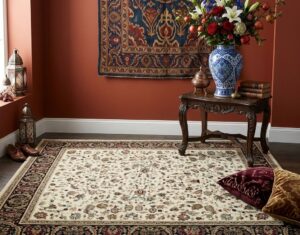
This was common in 20th century production and highly versatile in contemporary interiors. Often utilized as a balancing canvas, ivory or soft cream backgrounds soften the elaborate vine-work and arabesques. These lighter palettes are favoured in spaces where the rug needs to brighten a room rather than serve as a bold focal point.
- Accent and Highlight Colours
Kashan weavers utilized several specific accent colours to highlight fine details, floral motifs, and outlines:
- Gold and Yellow: Used to add warmth and create glowing highlights in flower petals and border details.
- Soft Green and Olive: Frequently used for weaving the stems, leaves, and intricate vine-work, grounding the floral motifs in a naturally aesthetic background.
- Soft Blues (Turquoise or Sky Blue): Sometimes these shades were used as an inner border colour or to highlight smaller design motifs.
Final Thoughts
The patterns and motifs of Persian Kashan carpets serve as a reservoir of information regarding the periods of art, culture, and tradition that lasted hundreds of years ago.
All the designs, from the medallions symbolizing eternity to the motifs representing life and growth, are retold by the artists’ hands.
Whether placed in a traditional home or a modern interior, Kashan carpets bring warmth, sophistication, and historical character to any space.
Giftex: A World of Collectibles Auction
This May, Giftex presents its iconic A World of Collectibles Auction, celebrating history, craftsmanship, and timeless artistry. From exquisite textiles and rare handcrafted treasures to unique vintage finds, the auction brings together remarkable pieces that reflect culture, heritage, and refined collecting.


About Post Author