
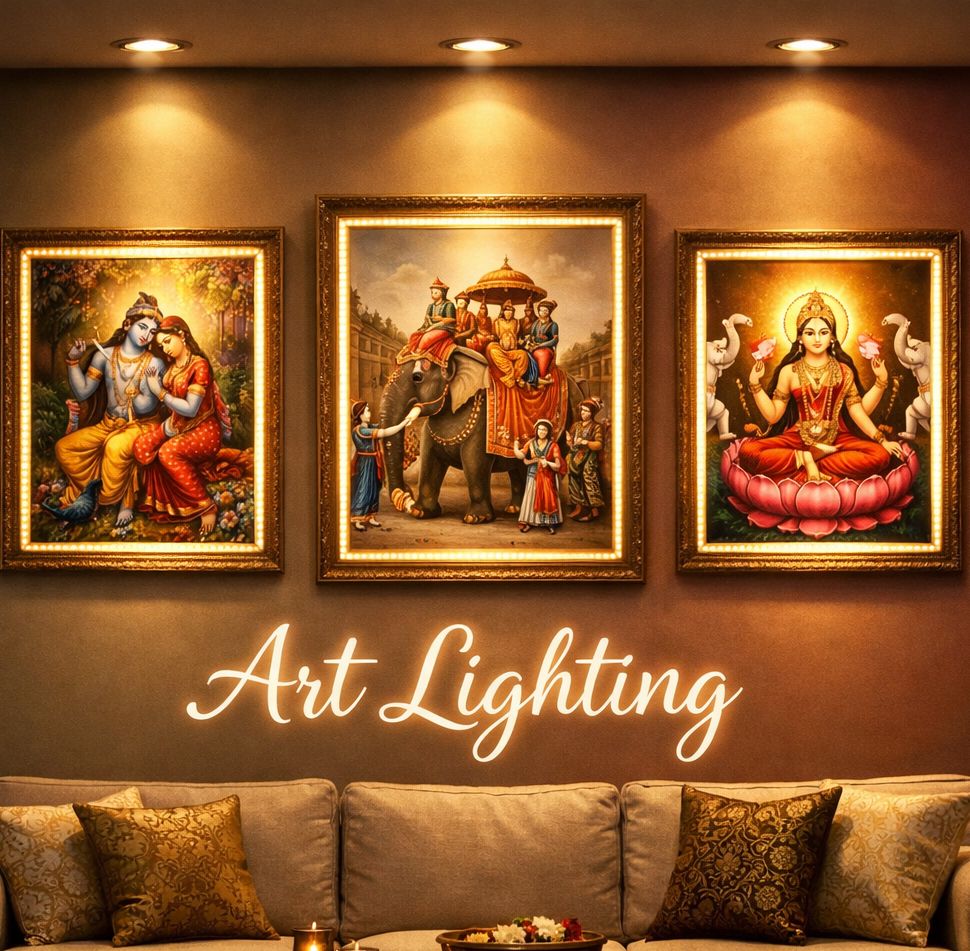
Art Lighting 101: 2026 Guide For Best Lighting Techniques for Artworks
Art has the remarkable ability to transform a space, evoke emotion, and tell a story. A carefully chosen piece can become the focal point of a room, setting the tone and atmosphere. However, even the most stunning artwork can lose its impact if it is not lit properly.
Art lighting is often treated as an afterthought, but in reality, it is the final and most crucial step in displaying art.
Without proper lighting, colours may appear dull, textures can disappear, and unwanted glare or shadows may distract from the beauty of the piece.
In modern homes, wall art with LED lighting has become a common choice. From natural light to advanced lighting systems, each method can dramatically change how your artwork is perceived.
This guide will walk you through everything you need to know about lighting your artwork in 2026, from basic principles to advanced techniques.
Also Read: The Secret To Art Rotation
Why Art Lighting Matters

Art lighting does more than just make your artwork visible. It enhances detail, defines texture, and influences mood.
When done correctly:
- Colours appear richer and more accurate
- Textures become more pronounced
- The artwork becomes a focal point
When done poorly:
- Glare can obscure the artwork
- Shadows may distort details
- Colours can look washed out or unnatural
- Heat or UV exposure may damage the piece
Types of Lighting for Artwork
-
Natural Light (Filtered Sunlight)
Natural light offers a dynamic and authentic way to illuminate art. It changes throughout the day, bringing out different tones and moods in a piece.
However, direct sunlight can be harmful. UV rays may cause fading, cracking, and long-term damage.
Best practices:
- Avoid direct sunlight exposure
- Position artwork in indirectly lit areas
- Use curtains, blinds, or UV-filtering films
-
LED Lighting
LED lighting has become the preferred choice for art display, and for good reason
Benefits of LED lights:
- Energy efficient and long-lasting
- Minimal heat emission
- Available in adjustable colour temperatures
Choose LED fixtures with a Colour Rendering Index (CRI) of 90 or above to ensure colours appear true to life.
-
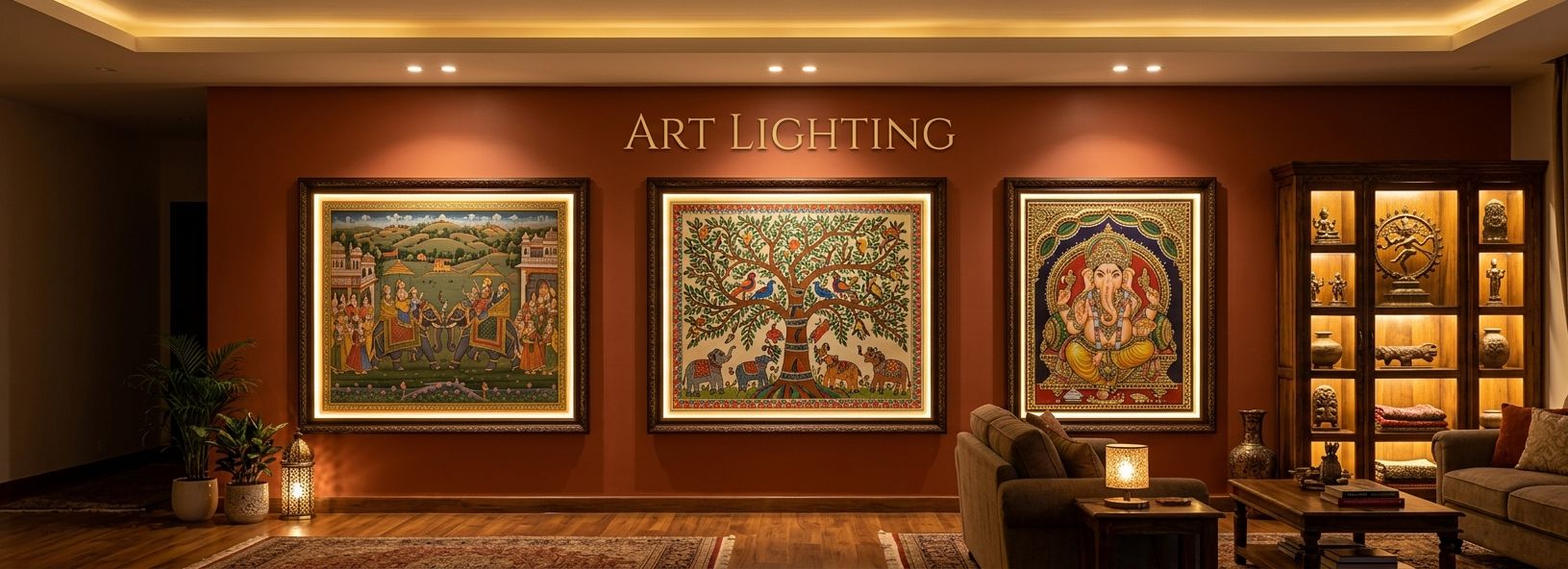
Ceiling-Mounted Accent Lights
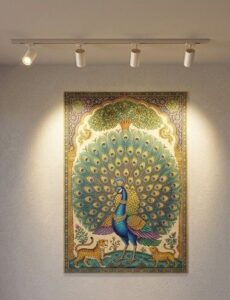
Ceiling-mounted accent lights are ideal when you want your artwork to stand out as the main focus.
These lights:
- Can be recessed or surface-mounted
- Allow directional control
- Provide clean, focused illumination
-
Picture Lights

Picture lights are mounted directly above or near the artwork, often attached to the frame or wall.
They create:
- A focused and intimate viewing experience
- Soft, controlled illumination
- A classic gallery-style presentation
These lights encourage viewers to engage closely with the artwork.
-
Track Lighting
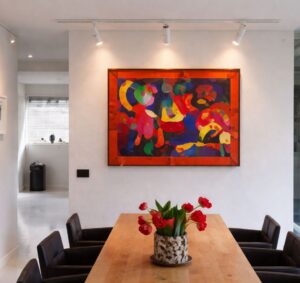
Track lighting has evolved significantly from bulky, outdated designs. Modern systems are sleek, flexible, and highly functional.
Advantages:
- Easy to install and adjust
- Multiple lights on a single track
- Ideal for changing displays or rotating artwork
Lighting Techniques for Artwork
-
Wall Washing
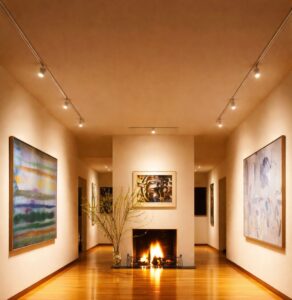
Wall washing provides uniform lighting across a surface, creating a neutral background for art.
It allows:
- Flexibility in changing artwork
- Even illumination without hotspots
- A gallery-like environment
Proper spacing and positioning of fixtures are essential to achieve a consistent effect.
-
The 30-Degree Rule
One of the most important principles in art lighting is the 30-degree rule.
Lights should be positioned at approximately a 30-degree angle from the artwork.
This:
- Reduces glare
- Prevents harsh shadows
- Enhances visibility of texture
-
Colour Rendering Index (CRI)
CRI measures how accurately a light source displays colours.
- Use CRI 90 or higher
- Ensure true representation of colours
- Avoid dull or distorted tones
-
Texture and Material Lighting
Different materials require different lighting approaches.
- Use side lighting for textured paintings to highlight depth
- Avoid direct lighting on glass-covered works
- Adjust angles to minimize reflections
-
Downlighting
Downlights, including recessed lights and spotlights, are used to highlight specific artworks.
When using downlights:
- Tilt the light at a 30-degree angle
- Avoid placing lights directly overhead
- Ensure even distribution
Lighting Different Types of Artwork
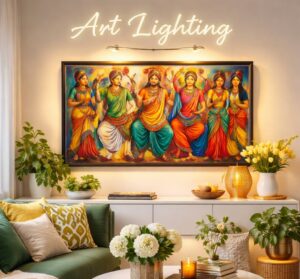
Each medium reacts differently to light, so a tailored approach is essential.
-
Oil Paintings
Oil paintings are durable but sensitive to heat and direct sunlight.
Challenges:
- Glossy surfaces may cause glare
- Heat can lead to cracking
Solution:
- Use multiple low-intensity light sources
- Avoid narrow beam spotlights
- Keep away from direct sunlight
-
Acrylic Paintings
Acrylic artworks are more forgiving when it comes to lighting.
They:
- Reflect less than oil paintings
- Work well with standard lighting setups
Ensure balanced lighting to maintain colour vibrancy.
-
Watercolour Paintings
Watercolours are usually protected by glass, which introduces reflection challenges.
Best practices:
- Maintain distance between the light and artwork
- Use anti-reflective glass
- Avoid excessive heat and UV exposure
-
Photographs and Prints
Photographs and prints should be treated similarly to watercolours.
Consider:
- Finish type (matte vs glossy)
- Light positioning to reduce glare
- UV protection to prevent fading
-
Sculptures
Sculptures require a completely different lighting approach.
Experts recommend:
- Using multiple light sources
- Lighting from different angles
- Experimenting with shadows for dramatic effect
Essential Lightning Tips For Art
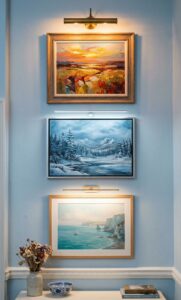
Tip 1: Understand Warm vs Cool Light
Light temperature plays a major role in how artwork is perceived.
Warm light (2000K–3000K):
- Creates a cozy, inviting atmosphere
- Enhances reds, oranges, and earthy tones
- Ideal for traditional art and sculptures
Cool light (3500K–5000K):
- Produces a crisp, modern feel
- Highlights blues, greens, and purples
- Suitable for contemporary and abstract art
Tip 2: Choose the Right Lighting Type
- Natural light: Dynamic but unpredictable
- Artificial light: Consistent and controllable
- Direct lighting: Focused and dramatic
- Indirect lighting: Soft and ambient
A combination of these often delivers the best results.
Tip 3: Learn from Galleries
Professional galleries are designed to showcase art at its best.
Observe:
- Light placement
- Intensity levels
- Colour temperature choices
Tip 4: Experiment with Lighting Styles
Different styles create different moods:
- Spotlighting: Dramatic and focused
- Ambient lighting: Soft and relaxing
- Accent lighting: Balanced and subtle
Tip 5: Handle Glass-Covered Art Carefully
Glass can create unwanted reflections.
To minimize glare:
- Use anti-reflective glass
- Adjust light angles
- Avoid placing lights directly in front
Frequently Asked Questions
-
How often should art lights be replaced?
Most modern lighting systems, especially LEDs, last for years. However, regular checks should be carried out to ensure there is no dimming or colour shift.
-
Which lighting is best for colour accuracy?
A colour temperature between 2700K and 4000K is ideal, with 3000K being widely preferred. Always choose lights with a CRI above 90.
-
How can glare be minimized?
Adjusting angles, avoiding direct placement, and using diffused lighting can significantly reduce glare.
-
Are smart lighting systems suitable for artwork?
Yes, smart lighting allows control over brightness, colour temperature, and timing, making it a great option for modern homes.
Final Thoughts: Transforming Your Space with Art Lighting
Art lighting is not just functional. It is both a science and an art form in itself.
When lighting is thoughtfully applied, your artwork is brought to life. Colours become more vivid, textures gain depth, and each piece tells its story more clearly.
By understanding lighting types, experimenting with placement, and tailoring your approach to each medium, your collection can be elevated from simple decor to a curated visual experience.
Giftex Modern & Contemporary Art Auction
Giftex unveils its Modern Indian Art Auction this April, presenting a thoughtfully curated collection of contemporary and modern masterpieces.
From bold expressions to timeless compositions, each artwork has been selected to reflect the evolving landscape of Indian art.
Transform your home with art that speaks to you.


About Post Author