
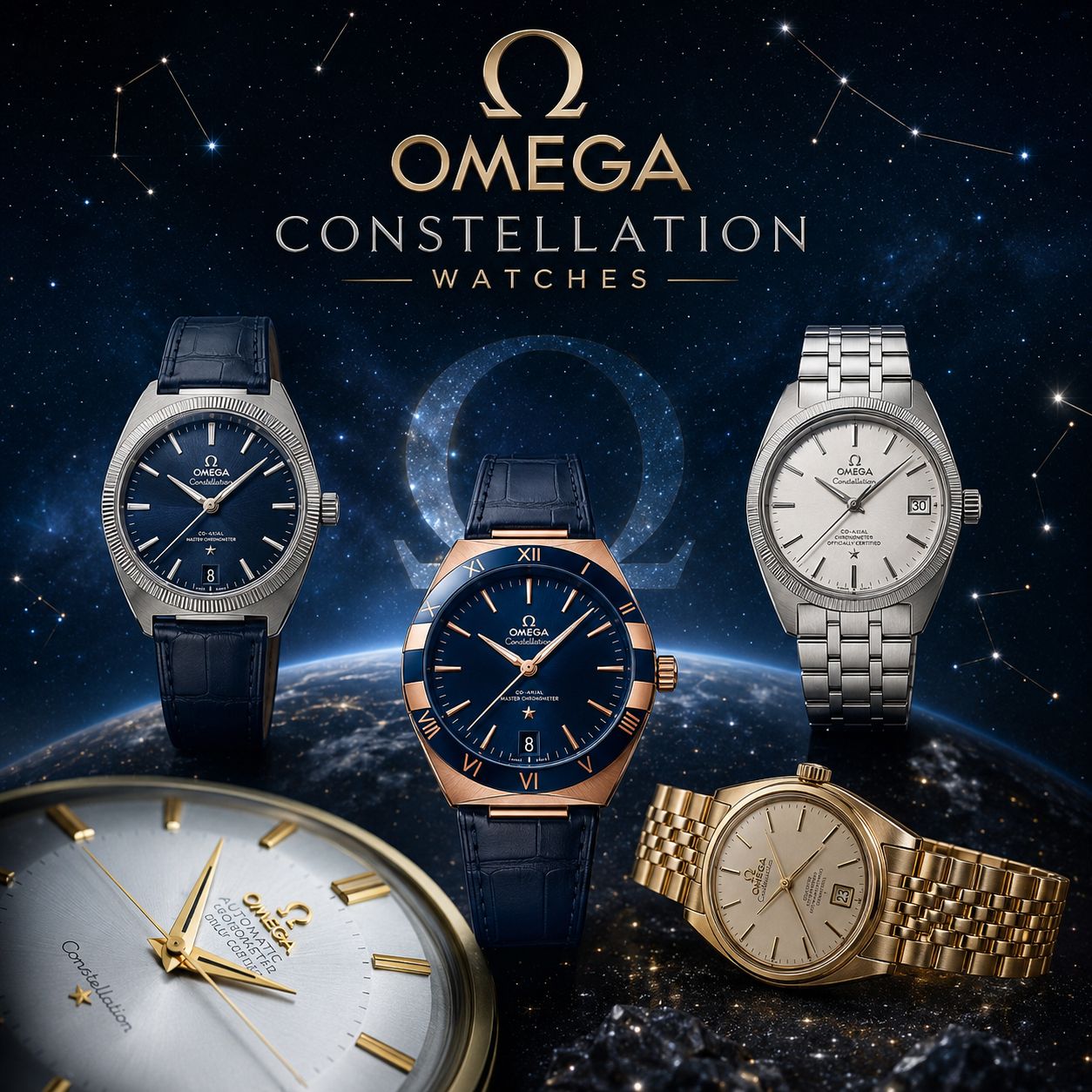
Omega Constellation Watches: Vintage Luxury at Its Finest
As smartwatches become increasingly digital and feature-heavy, the appeal of vintage watches is growing in popularity.
Among the many vintage watch brands, few brands hold up better than Omega. Vintage Omega Constellation watches remain at the top of many collectors’ wish lists. Prized for their unique blend of enduring style, accuracy and a rich history, these watches have captivated watch collectors for generations.
Their combination of classic styling and chronometer-certified precision helped establish Omega as one of the leading luxury watch brands in the world. Whether you are a serious watch collector, a first-time luxury buyer, or someone exploring vintage Omega watches, the Constellation line deserves attention.
In this guide, we will explore the world of vintage Omega Constellation watches, what makes them so coveted, and how to best identify the value of your vintage watch.
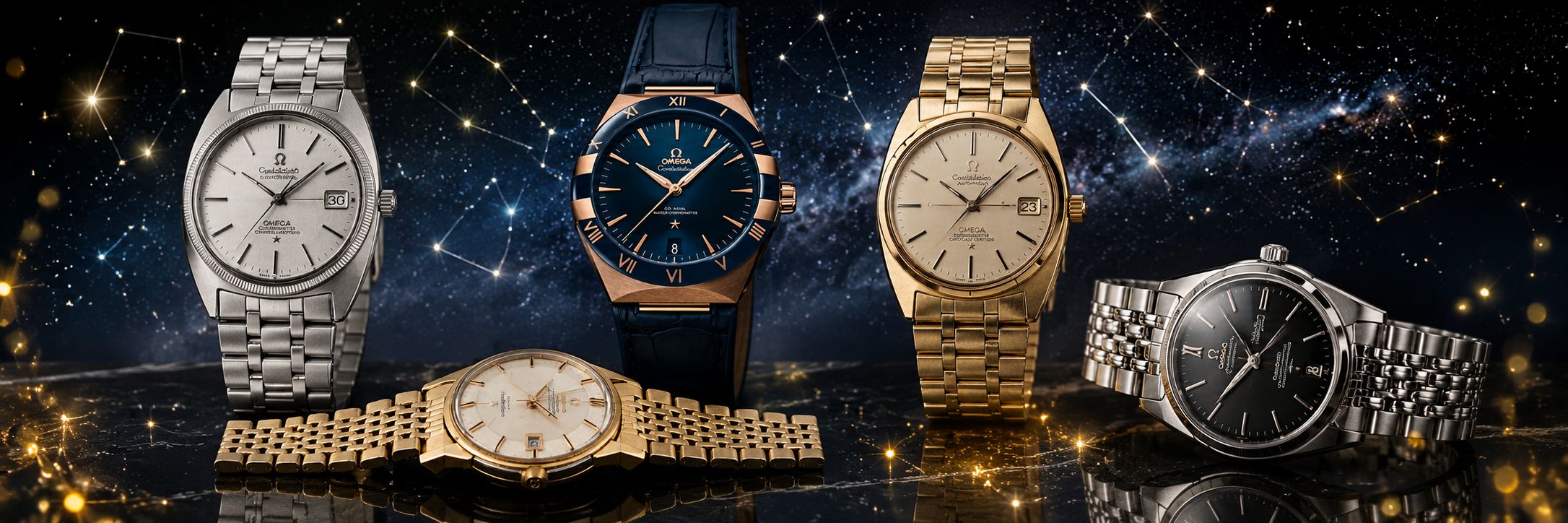
Also Read: Top 10 Collectible Vintage Omega Watches
A Brief History Of Omega Constellation
The Omega Constellation is celebrating its 74th anniversary this year.
Since its emergence in 1952, the Omega Constellation watch has remained one of the most recognisable models in the world of watchmaking.
The Omega Constellation wrist watch is the brand’s flagship line of luxury dress watches, celebrated for its chronometric precision.
With chronometer-grade mechanics, the Constellation quickly gained a reputation for its exceptional timekeeping capabilities.
Distinguished by the iconic 12-sided “pie-pan” dials of its early eras and the signature “four claws” introduced later, the collection remains a cornerstone of Swiss watchmaking excellence.
The Constellation got its name from the emblem detailing eight stars and an observatory imprinted on the back, which has remained a constant throughout all iterations of the model.
Over the years, the Constellation has evolved, with each new iteration bringing innovative improvements to both functionality and design, but the earlier models remain some of the most sought-after vintage watches on the market.
A Legacy of Precision
The story of the Omega Constellation begins with a commitment to precision timekeeping. Created to commemorate Omega’s achievements at the Geneva Observatory, the Constellation quickly became synonymous with accuracy. Over the years, the collection has evolved, incorporating advancements in watchmaking technology while staying true to its roots of precision and excellence.
Key Eras and Design Models
Vintage models of Omega constellation watches are celebrated for their mid-century elegance, transitioning through three distinct eras: the iconic “Pie-Pan” era (1950s–1960s), the avant-garde “C-Shape” and TV-dial era (1960s–1970s), and the signature “Manhattan” era (1980s).
- 1952: The “Pie-Pan” Era
The earliest examples of the Constellations hit the market in 1952. Those were Chronometer-Class watches with quite distinct design elements. A very recognizable detail is the dome-shaped dial. On these dials, the outermost area between the hour markers is split into 12 facets. A very unique look and the reason this style is under collectors, most famously known as the “Pie-Pan” dial.
Dials were adorned with stylized, angular arrow or “dagger” indices.
Caseback: A signature embossed medallion depicting the Geneva Observatory surrounded by eight stars, representing Omega’s chronometer precision records.
Notable Variations: These pieces came in three different finishing levels: “standard”, “de Luxe”, and “Grand Luxe”.
Materials and Colours: Most of the pieces – 43% – were produced in gold, 19% gold-capped or bicolored and 38% in steel. The dial colours paint a similar picture. White dominates with 46%, but already close behind, we see golden and silver dials with 26% and 19%, respectively.
- 1960: The C-Shape Era
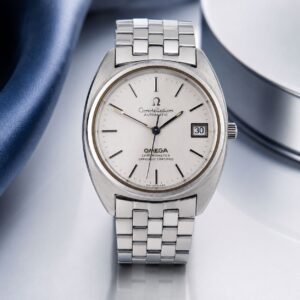
After the success of the Pie-Pan version, Omega – together with Gerald Genta – turned a full 180 degrees to envision a completely new design in the 1960s.
The C-Shape watch featured a much cleaner dial appearance with slim baton hands and jet markers.
A contemporary approach to the Constellation concept!
Caseback: The namesake for these pieces comes of course, from the new case-shape – reminding one of two Cs opposite to each other. This elongated case appearance gives the watch a larger feel than Pie-Pan Constellations while still having approximately the same diameter. The 1970s also brought bold “TV screens” and rectangular cases.
Textured Dials: Dials featured rich sun-brushed finishes, linen textures, and colour-matched sword-style hands.
Movements: Powered by advanced automatics like the Caliber 751 (with day/date complication), as well as early high-precision quartz movements (e.g., the Marine Chronometer).
The Materials and Colours: The majority of the C-Shape pieces come in steel with many sporting bright dials (silver or white).
- 1982: The “Manhattan” Era
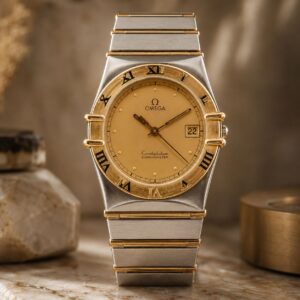
The Quartz Crisis was still in full swing in 1982 when Omega made the bold decision to redesign the Constellation, bringing one of its oldest model families back to its dressier, analogue roots. The Constellation Manhattan series.
The Constellation Manhattan series introduced many of the elements that define the Constellation today.
Design & Dial: The “Manhattan” design removed traditional lugs and introduced the four prominent “claws” on the sides of the bezel. Originally designed to hold the sapphire crystal and gasket securely in place, these claws became the signature aesthetic of the collection.
Case: The case was thin, with scallop-shaped, indented facets at the top and bottom, and integrated smoothly into a monolink bracelet, that gave the watch an incredibly thin, dressy profile.
- Modern Era (1990s–Present)
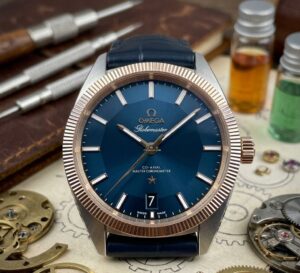
Moving into the 1990s and beyond, the “claws” were refined and softened, making the Constellation a staple of red-carpet glamour and luxury elegance.
Globemaster: In 2015, Omega paid homage to the original 1952 models by launching the Constellation Globemaster, reviving the vintage “pie-pan” dial design while upgrading it with state-of-the-art Master Chronometer movements.
Master Chronometer: Modern Constellation models—often available in rich metals like 18ct gold and O-MEGASTEEL—now feature ultra-precise, anti-magnetic Co-Axial Master Chronometer calibers, preserving the rich lineage of scientific accuracy.
How to Value & Buy a Vintage Omega Constellation
If you’re considering purchasing a vintage Omega Constellation, there are several important things to check.
- Verify Authenticity
Always examine the dial, movement, and case reference carefully. Many vintage watches contain replacement parts or refinished dials that reduce collector value.
- Check the Movement
Omega Constellation watches are known for their excellent movements. Ensure the movement is correct for the reference number and in good working condition.
Chronometer-certified calibers are especially desirable.
- Look for Original Dials
Original dials significantly impact value. Collectors generally prefer untouched dials, even if they show slight ageing or patina.
- Understand Case Materials
Constellation watches were produced in stainless steel, gold-cap, solid gold, and two-tone versions.
Final Thoughts
The Omega Constellation transcends the boundaries of timekeeping; it is a symbol of elegance, precision, and enduring style. From its historical roots with a vintage Omega Constellation, to its modern interpretations, the Constellation continues to capture the imagination of watch enthusiasts worldwide.
Owning an Omega Constellation is not just possessing a watch; it is embracing a legacy of craftsmanship, innovation, and timeless sophistication that remains unparalleled in the world of horology.
Giftex June Auction
This June, Giftex returns with its highly anticipated Collectibles Auction, bringing together an exceptional selection of rare and timeless treasures. From iconic vintage watches and fine jewellery to sought-after collectibles, the auction offers collectors and enthusiasts a chance to discover pieces with history, craftsmanship, and lasting value.
Featuring carefully curated lots from renowned brands and private collections, this auction is a must-attend event for watch collectors, jewellery connoisseurs, and lovers of luxury collectibles alike.


About Post Author