The Enduring Appeal of Handwoven Vintage Shawls
There’s something quietly powerful about a vintage handwoven shawl.
It does not scream for attention. It does not follow seasonal fashion trends. And yet, generation after generation, people continue to return to it. From the timeless beauty of handwoven Kani shawls to the unmatched softness of authentic Kashmiri Pashmina shawls, these vintage shawls continue to hold emotional, artistic, and cultural value that modern fashion rarely achieves.
Every authentic handwoven shawl carries evidence of human touch. Months of labour are woven into every inch. Patience is visible in every motif. Unlike factory-made accessories that often look identical, no two vintage shawls are ever truly the same.
That is exactly why collectors, textile lovers, luxury buyers, and even younger fashion enthusiasts are once again turning toward vintage handwoven shawls.
These shawls are not merely winter accessories. Instead, they are wearable history.
In this blog, you’ll discover what makes vintage handwoven shawls so special, how to identify genuine craftsmanship, how to avoid fake replicas, and why investing in handwoven shawls remains worthwhile even today.
Also Read: Top 10 Antiques That Were Made To Last
Why Do Vintage Handwoven Shawls Still Matter Today?
Fashion trends change constantly. However, vintage handwoven shawls continue to remain relevant across decades and cultures.
The reason is simple.
They were never created to chase trends in the first place.
Modern fashion is often built around speed. Products are designed for quick manufacturing, fast sales, and frequent replacement. As a result, many modern textiles lose value within a short period.
Handwoven shawls were created differently.
Their making involves slow craftsmanship, detailed weaving techniques, natural materials, and months of dedicated labour. Because of this, they were built to last for generations rather than seasons.
That difference can immediately be felt.
An authentic handwoven Kashmiri Pashmina shawl feels softer, lighter, warmer, and more breathable than machine-made alternatives. Similarly, handwoven Kani shawls carry artistic depth that printed or power-loom products cannot reproduce.
Most importantly, these shawls hold emotional value.
Many vintage shawls are passed down within families as heirlooms. They become an integral part of weddings, celebrations, and cherished memories.
As sustainability also becomes more important globally, handwoven shawls are gaining renewed appreciation. Since natural fibres, traditional weaving methods, and long-lasting quality are involved, they align closely with slow fashion values.
Characteristics of Hand-spun Vintage Shawls
- The Art of Hand-Spun Yarn
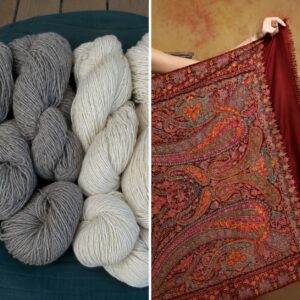
Authentic handwoven shawls are crafted from hand-spun yarn, which requires a level of sensitivity that machine spinning cannot match.
- Fiber Protection: Hand-spinning protects the delicate structure of the Changthangi goat fiber (pashm), keeping it soft and breathable.
- Higher Count: Hand-spun yarn can be spun to a higher count (finer) than machines, as high speeds often cause breakage of the delicate 12-16 micron fibers.
- Irregularity is Art: Unlike uniform machine yarn, hand-spun yarn has subtle irregularities that contribute to a softer, warmer, and more natural feel.
- Manual “Kani” Weaving Techniques
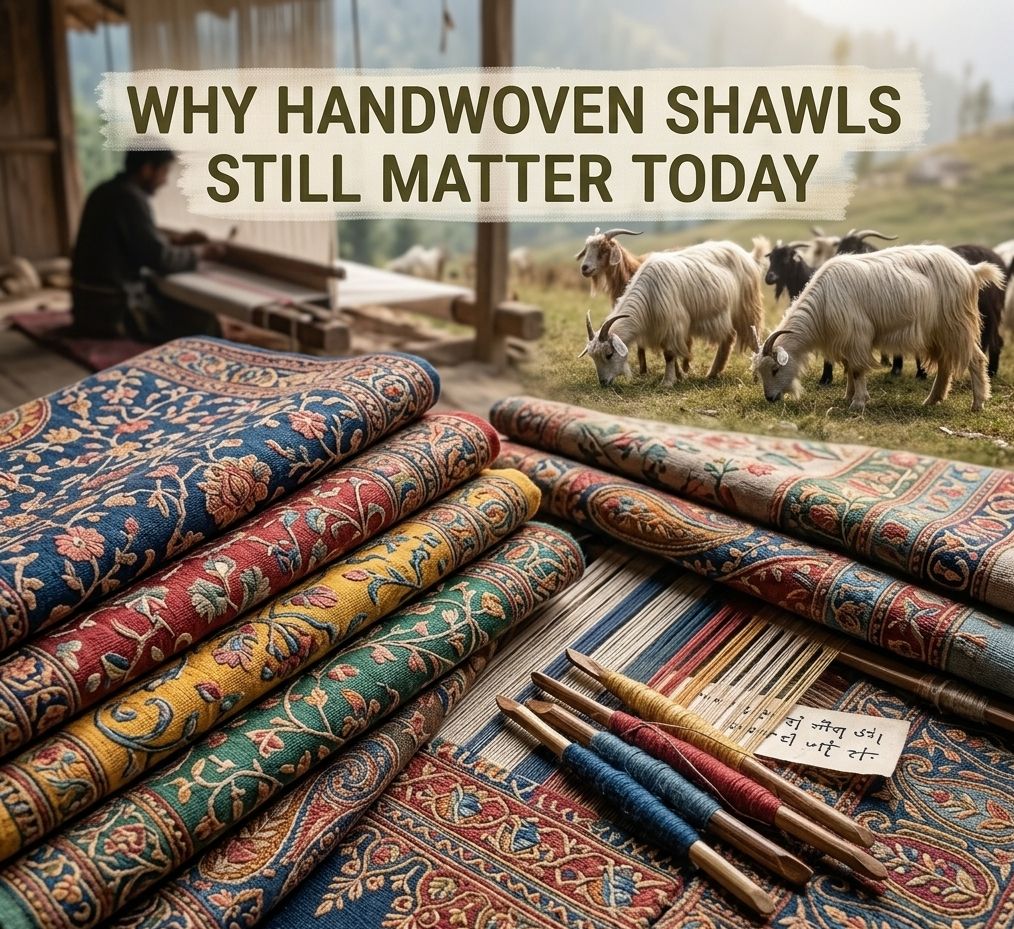
The “Kani” technique, which dates back hundreds of years, involves weaving the design directly into the fabric, rather than printing or embroidering it afterwards.
- Intricate Coding (Talim): Weavers use a coded, handwritten pattern called Talim, which dictates where each colour thread goes, requiring immense patience and mental focus.
- Wooden Sticks (Kanis): Instead of a standard shuttle, weavers use small wooden sticks (Kanis) to interlace colourful threads, weaving the pattern into the shawl.
- Time-Intensive: A skilled artisan may weave only one inch of an intricate Kani shawl per day.
- Real-Time Tension Control
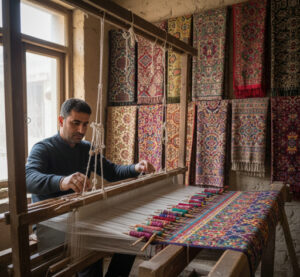
The “invisible factor” of handloom weaving is the ability of the artisan to manage tension manually.
- Adaptive Tension: Weavers feel the resistance of the yarn, adjusting tension on the wooden handloom, protecting the elasticity and softness of the delicate Pashm fibre.
- Dynamic Response: Machines apply constant force, which can result in compressed, less breathable, and less soft fabric.
- Intricate Hand Embroidery (Sozni)
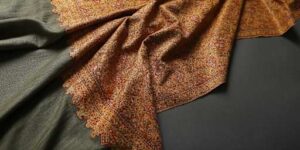
After weaving, hand-embroidered shawls, such as Sozni, feature work that cannot be replicated.
- Needle Path: The intricate needlework, often inspired by Kashmiri flora and birds, shows the unique path of the needle on the reverse side, unlike the flat, uniform back of machine embroidery.
- Variable Depth: Each petal and leaf has slight, artistic variations that reflect a human touch rather than being produced by standardized, artificial loom.
How to Recognise Authentic Sozni Work
- The reverse side shows delicate needle paths.
- The embroidery appears refined rather than overly thick.
- Slight variations in stitch depth are visible.
- The design feels organic rather than mechanically perfect.
- Natural and Artistic Dyeing
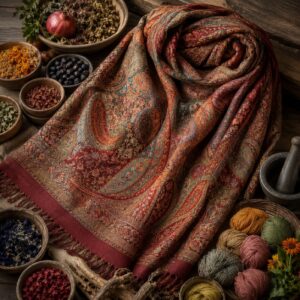
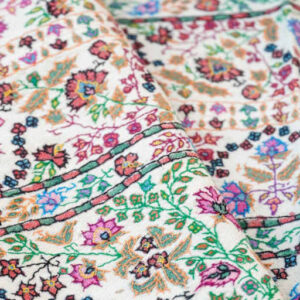
Vintage handwoven shawls often use plant-based natural dyes.
Unlike synthetic dyeing methods that produce perfectly uniform colours, natural dyes create gentle tonal variations within the fabric.
Over time, these colours mellow beautifully instead of appearing harsh or artificial.
This ageing process gives authentic vintage shawls a soft, graceful appearance that modern replicas rarely achieve.
Hallmarks of Authentic Handwoven Shawls
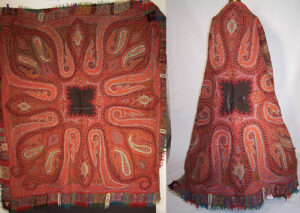
Identifying authentic craftsmanship becomes easier once you know what to look for.
- Small Imperfections in the Weave
Slight irregularities are normal in genuine handwoven shawls.
Minor variations in texture or stitching are signs of human involvement rather than flaws.
- Hand-Finished Fringes
Authentic Kashmiri shawls usually have fringes created directly from warp threads.
If fringes appear overly perfect, synthetic, or machine-stitched, the shawl may not be genuine.
- Intricate Sozni Embroidery
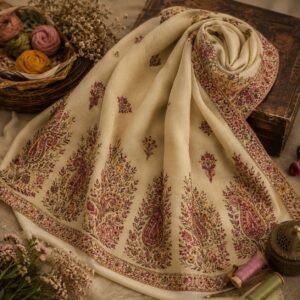
Real Sozni embroidery appears delicate and artistic rather than stiff or repetitive.
- Soft, Mature Colour Tones
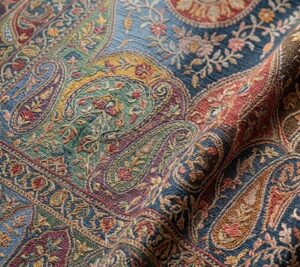
Vintage shawls dyed naturally often display nuanced, mellow colours rather than extremely bright shades.
How to Spot Fake Vintage Handwoven Shawls
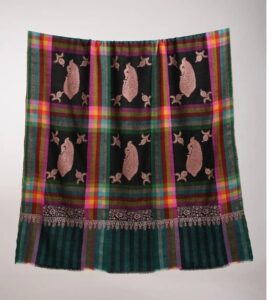
As demand for vintage textiles increases, modern replicas have also become common.
Fortunately, several warning signs can help buyers identify fake products.
- Extremely Low Prices
Authentic handwoven shawls require months of labour and skilled craftsmanship. Therefore, genuine pieces are rarely cheap.
- Machine-Like Uniformity
If the weave, motifs, and stitching appear perfectly symmetrical throughout, machine production is likely involved.
- Artificial Shine
Many replicas use synthetic fibres that produce excessive shine or stiffness.
- Printed Instead of Woven Patterns
Authentic woven patterns appear integrated into the fabric itself rather than sitting flat on the surface.
- Poor Reverse Side Detailing
Machine embroidery usually creates a flat, repetitive backside. Hand embroidery reveals more organic stitching paths.
- Fake Ageing
Some replicas are artificially distressed to appear vintage. However, genuine ageing usually appears softer and more natural.
Why Vintage Handwoven Shawls Are Worth Investing In
Vintage handwoven shawls are more than fashion accessories.
They represent heritage, patience, artistry, and sustainability.
As handmade textiles become rarer, authentic vintage shawls continue to increase in cultural and collectible value. Many buyers now appreciate them as investment pieces because true craftsmanship cannot be mass-produced easily.
More importantly, these shawls carry emotional value that modern products often lack.
That is why vintage handwoven shawls continue to matter today.
Not because they follow trends.
But because they rise above them.
Giftex Presents: A World Of Collectibles Auction
This May, Giftex is set to unveil a carefully curated collection of rare antique and vintage treasures through its World of Collectibles Auction. From vintage textiles to antique décor pieces and timeless collectibles, the auction brings together craftsmanship, history, and artistry from different eras.
Whether you are a seasoned collector, an interior enthusiast, or someone who appreciates heritage pieces, this auction offers a rare opportunity to own objects with character, story, and lasting value.


About Post Author