The Untold Language of Cloth: A Journey Through Narrative Shawls
Some stories have never been written down, yet they have survived for centuries, thread by thread, loom by loom. Long before books, printing presses, and digital archives existed, civilizations turned to cloth to preserve memory, identity, and belief. Textiles were never merely decorative. Instead, they became a living language woven into daily life.
Across cultures and continents, people stitched their joys, grief, spirituality, and social traditions into fabric. Every motif carried meaning. As a result, vintage textiles evolved into powerful historical records that continue to speak even today.
Among the most cherished textile traditions are the vintage shawls, which carry centuries of heritage, intricate craftsmanship, and cultural symbolism. From the rich weaves of Kashmir Pashmina shawls to the vibrant patterns of the Kani shawls to the exquisite Jamavar shawls, narrative shawls embody the artistic spirit, culture and heritage of the regions they originate from. Today, vintage textiles are admired not only for their beauty but also for the cultural memory woven into every design.
Also Read: Top 10 Antique Shawls Throughout History
Textile Chronicle: When Fabric Became Language
The history of woven textiles dates back more than 27,000 years. Long before paper manuscripts existed, human civilizations used weaving to document beliefs, rituals, and social structures.
As societies evolved, textiles became more than protective garments. They transformed into visual records of civilization itself.
Ancient Egyptian textiles, for instance, reflected spiritual beliefs and royal power. Meanwhile, the Silk Road carried luxurious woven fabrics across continents, allowing artistic influences, religious ideas, and craftsmanship techniques to travel between cultures.
Consequently, textiles became one of humanity’s earliest forms of communication.
Textile Traditions Across Ancient Civilizations
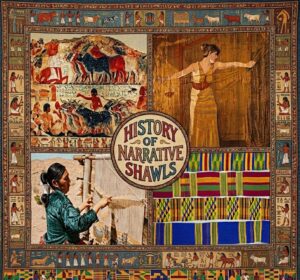
Throughout history, weaving was often considered sacred.
In ancient Greece, mythology introduced Penelope, who famously wove and unwove her tapestry while waiting for Odysseus. Her weaving became a symbol of patience, intelligence, and resistance.
Similarly, the Navajo people of North America believed the universe itself was woven into existence.
Meanwhile, in West Africa, the Ashanti kingdom transformed Kente cloth into a visual language. Every colour and geometric pattern represented social rank, ancestry, leadership, or moral philosophy. Therefore, cloth functioned as both identity and storytelling.
The History of Narrative Shawls
- Sacred Origins of Weaving
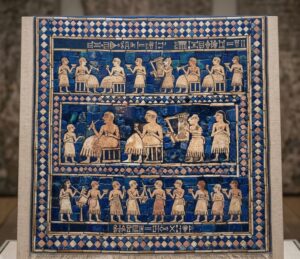
The earliest shawls from ancient Mesopotamia and Persia were created for protection against harsh climates. However, over time, these garments evolved into symbols of craftsmanship, spirituality, and social identity.
Hand-spun fibers and intricate weaving techniques immediately reflected skill and status.
- Shawls as Personal and Domestic History
Historically, women used embroidery and woven textiles to document family histories and daily life. Bedsheets, samplers, tablecloths, and shawls often carried symbolic motifs connected to marriage, fertility, faith, and ancestry. Through stitches and patterns, stories were preserved inside the domestic sphere.
- Political and Social Documentation
Textiles have also documented political and social transformation across centuries.
During the 18th and 19th centuries, narrative samplers often functioned as illustrated storybooks. Communities used embroidery and woven imagery to record historical events, moral teachings, and social customs.
- Protection, Utility, and Symbolism
Although shawls initially served practical purposes, symbolism soon became equally important.
Bridal shawls, particularly those woven in red and gold, represented prosperity, blessings, and fertility.
Thus, narrative shawls became deeply layered objects carrying emotional, spiritual, and cultural significance.
Different Weaves of Narrative Shawls
Across the world, different communities developed their own forms of narrative shawls, each reflecting unique histories, beliefs, and social traditions.
- Cultural and Tribal Identity Shawls
These shawls act as markers of community, rank, and history, particularly in indigenous cultures.
- Naga Tribal Shawls
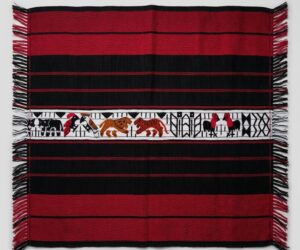
Among the Naga tribes of Northeast India, shawls carry strong cultural significance. Bold red, black, and white geometric patterns identify tribal affiliation and warrior traditions. Historically, specific motifs indicated achievements, social standing, and rites of passage.
- Palestinian Shawls and Resistance
Similarly, Palestinian shawls and embroidered textiles preserve regional identity and cultural resilience. Traditional Sharshoba embroidery patterns vary by region and family lineage. Over time, these textiles evolved into symbols of memory, resistance, and belonging.
- Andalusian Mantón Shawls
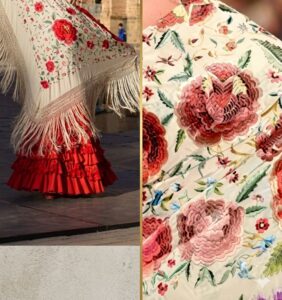
In Spain, the Andalusian Mantón became closely linked with Flamenco culture. Rich embroidery and flowing fabric allow dancers to express emotion, passion, and regional pride through movement.
- Heritage and Mythological Motifs in Vintage Shawls
- The Tree of Life and Paisley Motif

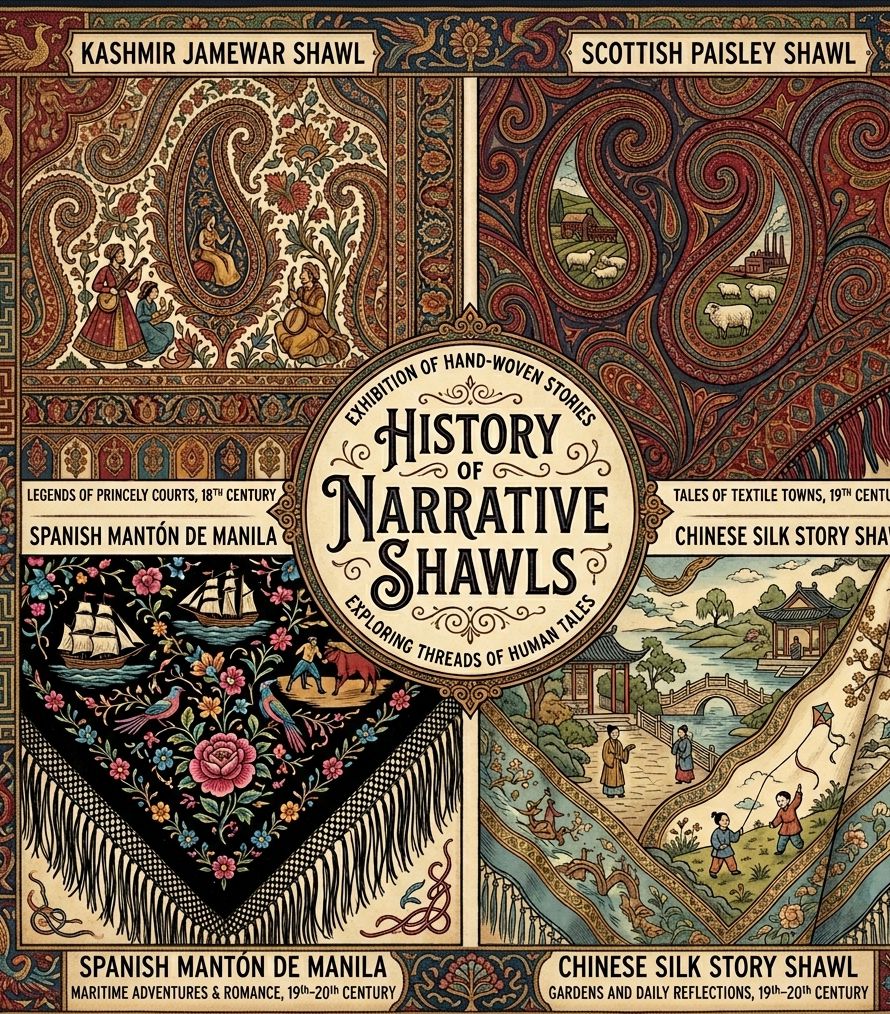
One of the most recognizable motifs in vintage Kashmiri shawls is the boteh, widely known today as the paisley pattern.
This symbol represents fertility, eternity
Tree of Life: Flowing vines and curved floral forms often reflect creation, continuity, and family lineage.
Because of its beauty and symbolism, the paisley motif eventually travelled across Europe and became globally influential in textile design.
- Lotus Motifs in Indian Textiles
The lotus motif remains deeply significant in Indian textile traditions.
Representing purity, rebirth, and spiritual awakening, the lotus frequently appears in ceremonial shawls, Mekhela Chadors, and handwoven silks across India.
- Geometric Patterns and Cosmic Order
Geometric patterns found in Middle Eastern, Berber, and Central Asian shawls often symbolize harmony, structure, and divine protection.
Diamonds, chevrons, and symmetrical forms were believed to reflect cosmic balance and universal order.
- Procession and Historical Narrative Shawls
- Baraat Shawls of Kashmir
Rare Baraat shawls from Kashmir depict wedding processions filled with musicians, horses, floral decorations, and ceremonial figures.
These embroidered scenes preserve traditional celebrations through textile art.
- Kalamkari Storytelling Shawls
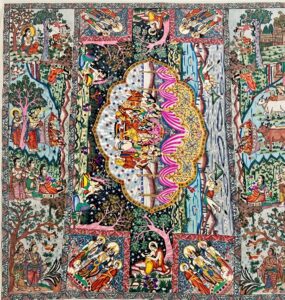
KalamkAboutari textiles from India are famous for their hand-painted narrative scenes inspired by the Ramayana and Mahabharata.
These storytelling shawls visually communicated religious teachings and cultural values across generations. As a result, mythology survived through fabric as much as through oral storytelling.
- Assam’s Mekhela Chador
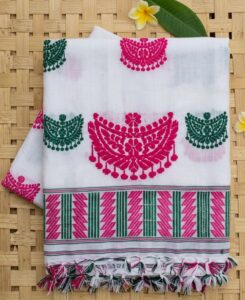
Few textile traditions preserve symbolic storytelling as richly as Assam’s Mekhela Chador.
Every motif woven into Assamese silk carries meaning. The lotus symbolizes purity, the elephant represents royal power, and the peacock reflects grace and beauty.
These motifs formed a visual language passed down through generations of Assamese weavers.
- Jamawar and Phulkari Shawls
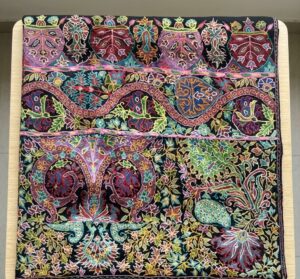
Jamawar shawls from India are admired for their luxurious tapestry weaving and Persian-inspired floral motifs. Their elaborate craftsmanship reflects Mughal artistic influence and royal refinement.
Meanwhile, Punjab’s Phulkari shawls, literally meaning “flower work,” celebrate rural life, blessings, harvests, and festivities through vibrant embroidery.
- Personal Narratives and Modern Heritage
- Heirloom and Reversible Shawls
Many narrative shawls are designed to become heirlooms passed through generations.
Modern artisans often combine traditional techniques such as Kani weaving with contemporary motifs reflecting personal memory and evolving identity.
As a result, narrative shawls continue adapting while preserving heritage craftsmanship.
- Kutch Mirror Work and Protective Symbolism
Kutch embroidery from Gujarat uses mirrors and intricate stitching to symbolize divine protection.
Traditionally, mirrors were believed to deflect the evil eye while reflecting sunlight and positive energy.
Therefore, these shawls continue blending beauty with spiritual symbolism.
The Weavers: Keepers of Living Heritage
Behind every handcrafted shawl stands a weaver preserving generations of inherited knowledge.
Across Kashmir, Assam, Nagaland, Punjab, and countless weaving communities worldwide, traditional techniques continue to survive through oral teaching and lived practice.
However, machine-made imitations and fast fashion increasingly threaten these heritage crafts. Therefore, preserving handmade textile traditions has become more important than ever.
Final Thoughts
Narrative shawls are far more than decorative textiles. They are living chronicles of human history woven through memory, ritual, artistry, and identity.
From the sacred weaving traditions of ancient civilizations to the intricate craftsmanship of Kashmiri shawls and Assamese silks, these textiles continue to preserve stories that transcend written language.
Even today, every thread carries echoes of the hands that wove it and the generations that protected its meaning.
Giftex: A World of Collectibles Auction
This May, Giftex returns with its celebrated A World of Collectibles Auction, bringing together an extraordinary selection of rare antiques, vintage collectibles, and timeless treasures. From exquisite heirlooms and historic artifacts to beautifully preserved vintage finds, the auction offers collectors and enthusiasts a chance to discover pieces rich in history, craftsmanship, and character.


About Post Author