Phulkari Shawls: Threads of Punjab’s Timeless Heritage
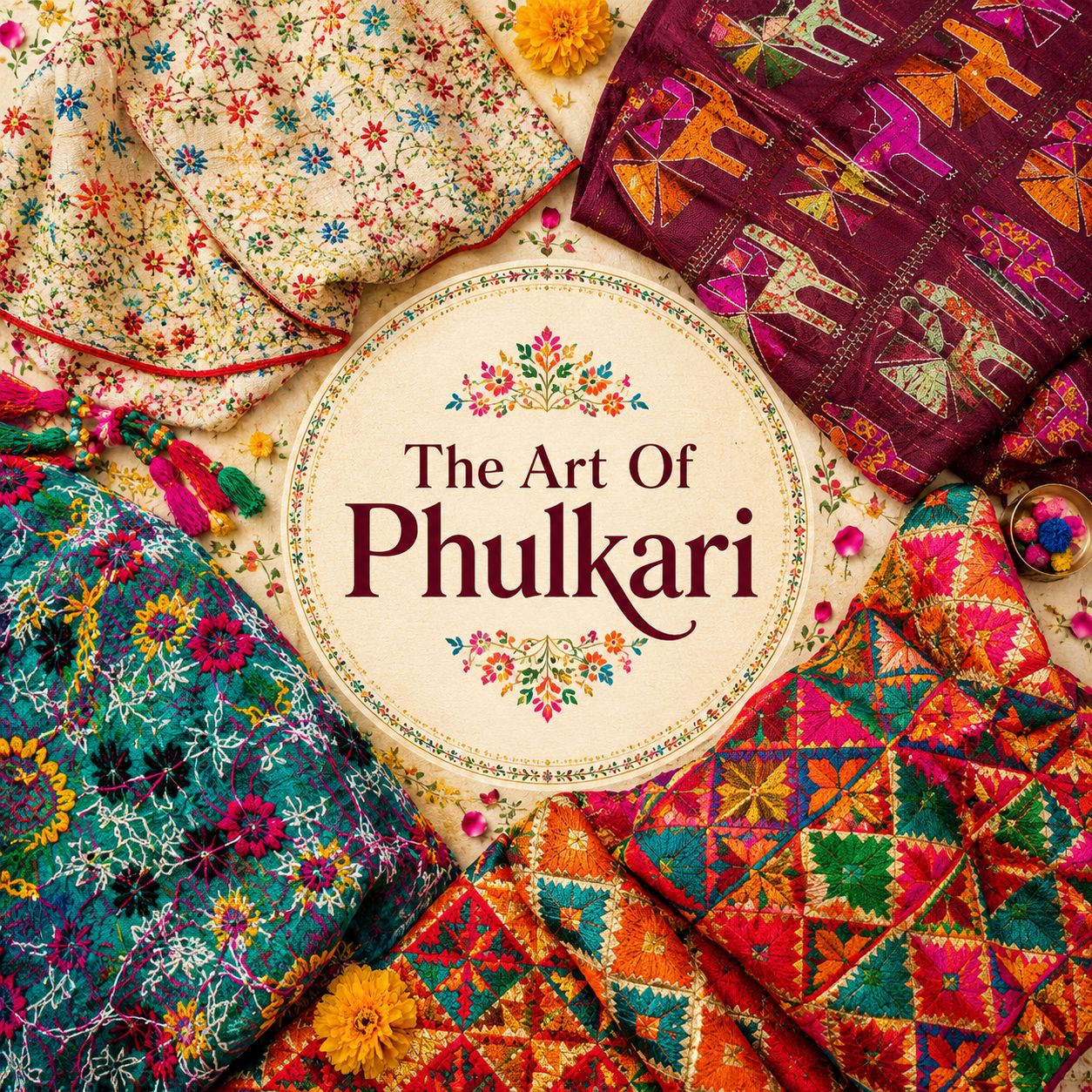
Phulkari shawls, a cherished art form in Indian textiles, weave stories into fabric with their vibrant threads and striking patterns.
The Phulkari shawls of Punjab wonderfully capture the land’s eternal beauty with each colourful stitch, creating gorgeous works of embroidery.
More than just needle and thread, Phulkari embroidery is an emotion—a tapestry of dreams, love, and heritage woven by the women of Punjab.
Indian shawls, particularly vintage Indian shawls originating from Kashmir and Punjab, are more than simple garments; they are profound pieces of textile art, history, and cultural heritage.
Among these vintage treasures, Vintage Indian Phulkari shawls are treasured textiles renowned for their vibrant, “flower-work” embroidery.
Whether it’s the lush blooms or intricate geometric patterns, each weave has a story and significance that connect artisans and admirers alike.
Over the years, Phulkari has evolved from a rural folk tradition into a global fashion statement. Yet, despite modern adaptations, the essence of this art form has remained deeply rooted in Punjabi identity and heritage.
In this blog, we are going to illuminate the rich artistry of colour, pattern, and motifs that define these traditional textiles and explore how this rural craft has blossomed into a global fashion statement.
Also Read: The Enduring Appeal Of Handwoven Vintage Shawls
What is Phulkari?
Phulkari comes from two words: Phul, meaning “flower”, and Kari, meaning “work.” It is a folk embroidery tradition from Punjab where colourful silk threads are used to create intricate patterns.
Rooted in artistic tradition, this craft dates back centuries and was first woven by women in rural communities.
History Of Phulkari Shawls
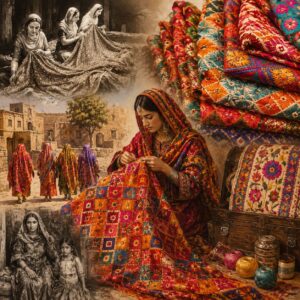
These shawls were traditionally created on coarse handwoven fabric using untwisted silk threads, locally known as pat. While its exact origins remain elusive, Phulkari finds mention in the folklore of Punjab and historical texts, such as the Guru Granth Sahib, underscoring its importance in Sikh and Punjabi culture.
Phulkari was traditionally used to make dupattas, shawls, and other garments for weddings and special occasions, often gifted to brides as part of their dowries.
Because every piece was handmade, no two Phulkari shawls were ever exactly alike. During the colonial period, Phulkari began attracting international attention because of its artistic complexity and vibrant aesthetics. Over time, collectors and textile historians recognised these shawls as remarkable examples of Indian folk art.
The Making of Phulkari: Craftsmanship and Creativity
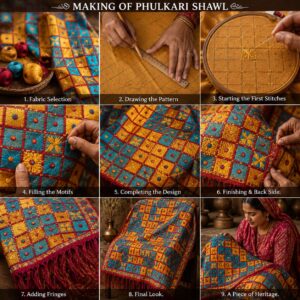
The creation of a Phulkari shawl is a slow and deeply artistic process. Traditionally, embroidery was done entirely by hand within the home, often while women gathered together to sing folk songs and share stories.
One of the most fascinating aspects of Phulkari embroidery is that patterns are rarely sketched beforehand. Instead, artisans work from memory and imagination, following mental blueprints developed through years of practice.
The embroidery is executed using a darning stitch technique from the reverse side of the fabric. As the thread emerges on the front, shimmering geometric and floral patterns gradually come to life.
Creating a detailed Phulkari shawl can take anywhere from several days to many months, depending on the intricacy of the design.
Importantly, slight irregularities are often visible in authentic handmade Phulkari shawls. However, these are not considered flaws. Instead, they are celebrated as signatures of human craftsmanship that reveal the handwoven authenticity of the textile.
Types of Phulkari Shawls
Phulkari embroidery exists in several distinctive styles, each carrying its own cultural purpose and artistic identity.
- Bagh Phulkari
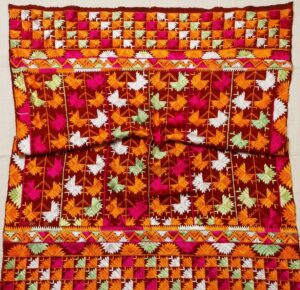
The word Bagh means “garden.” In this style, the embroidery completely covers the base fabric, making the cloth almost invisible beneath dense thread work.
- Chope Phulkari
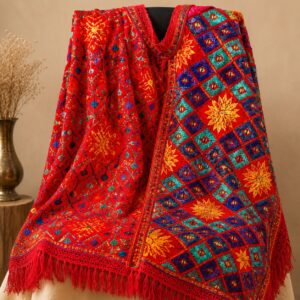
Chope is traditionally associated with weddings. These shawls are usually gifted to brides by their maternal grandmothers and feature heavy double-sided embroidery along the borders.
- Thirma Phulkari
Thirma shawls are created on white khaddar fabric with delicate embroidery patterns.
- Darshan Dwar
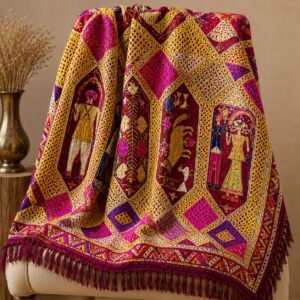
Meaning “gateway to the divine,” Darshan Dwar Phulkari features architectural motifs inspired by temple entrances and ceremonial arches.
- Sainchi Phulkari
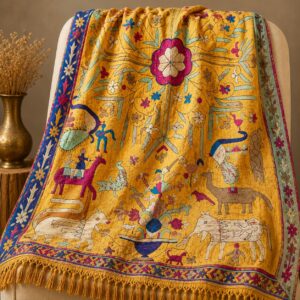
Sainchi embroidery is particularly unique because it depicts scenes from everyday rural life. Farming activities, animals, village women, and local celebrations are often illustrated.
- Til Patra
This style contains sparse embroidery with tiny scattered motifs resembling sesame seeds.
- Panchranga and Satranga
These vibrant shawls feature chevron and striped patterns in five or seven colours respectively. Their lively combinations beautifully capture the festive spirit of Punjab.
The Symbolism Behind Phulkari Motifs
Every motif in Phulkari embroidery carries a symbolic meaning.
- Floral Motifs
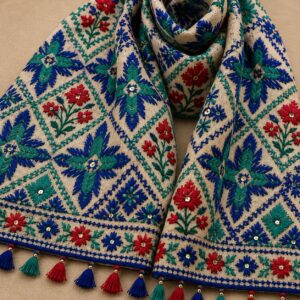
Flowers are the heart of Phulkari embroidery. They symbolise beauty, growth, joy, and femininity.
- Bird Motifs
Birds frequently appear in traditional Phulkari patterns and are associated with freedom, happiness, and spiritual longing.
- Geometric Patterns
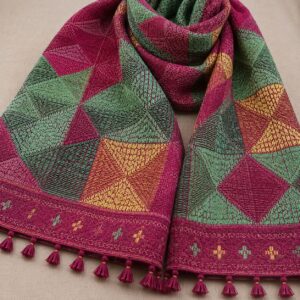
Diamonds, triangles, squares, and chevrons are central to Phulkari design. These symmetrical forms reflect balance, harmony, and mathematical precision.
- Nature and Animal Motifs
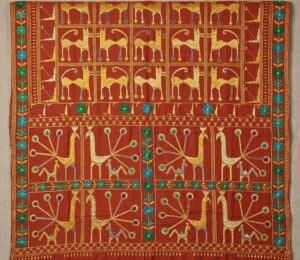
Sun motifs symbolise vitality and life, while animals often represent strength, protection, and connection to rural traditions.
- Nazar Butti
A small protective motif called Nazar Butti is often embroidered to ward off the evil eye and bring good fortune.
Colours in Phulkari: A Vibrant Identity
Phulkari shawls are renowned for their bold and contrasting colours.
- Red
Red is one of the most dominant colours in Phulkari embroidery. It symbolises love, fertility, celebration, and marital happiness.
- Yellow and Orange
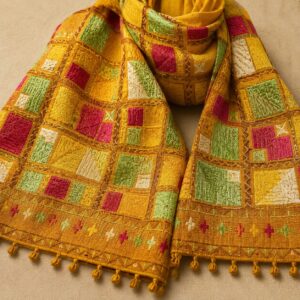
Yellow reflects prosperity, harvest, and the golden mustard fields of Punjab. Orange represents warmth, vitality, and festive energy.
- Green and Blue
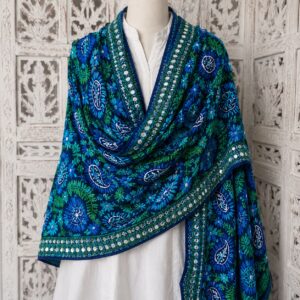
Green symbolises renewal, fertility, and harmony with nature. Blue, though less commonly used, represents spirituality and calmness.
- Gold and White
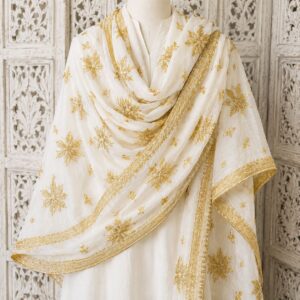
Golden-yellow thread work is especially admired because it creates a luminous effect on fabric. White embroidery often signifies purity and serenity.
Cultural Significance of Phulkari Shawls
Phulkari is deeply intertwined with Punjabi social life and traditions.
- Weddings and Celebrations
Phulkari shawls are an essential part of Punjabi bridal attire.
- Birth and Family Traditions
In many households, a new Phulkari would be started upon the birth of a daughter, symbolising a mother’s love and hopes for her child’s future.
- Community Bonding
Women traditionally embroidered together while singing folk songs and sharing stories.
The Role of Phulkari in Modern Wardrobes
Phulkari has seamlessly transitioned from a traditional Punjabi craft into a celebrated element of contemporary fashion.
- Traditional Craft Meets Contemporary Style
One of the most remarkable aspects of Phulkari is its ability to adapt to changing fashion trends. Modern fashion enthusiasts often style Phulkari dupattas and shawls with minimalist kurtas, dresses, denim, and fusion wear to create an elegant balance.
- A Timeless Choice for Occasion Wear
Whether worn during weddings, cultural celebrations, family gatherings, or festive occasions, these embroidered textiles bring richness and vibrancy to traditional attire.
- Phulkari as a Meaningful Gift
Phulkari shawls and dupattas are also cherished as thoughtful gifts because they embody artistry, tradition, and emotional significance.
The Enduring Legacy of Phulkari Shawls
Phulkari shawls are far more than embroidered textiles. They are living expressions of Punjab’s artistic heritage, emotional traditions, and cultural memory.
Every stitch reflects patience, creativity, and human connection. Every motif tells a story of celebration, nature, love, or protection. Although fashion trends continue to evolve, the timeless beauty of Phulkari remains unchanged.
By embracing Phulkari, one does not simply wear a shawl. One carries forward centuries of tradition, craftsmanship, and storytelling woven into vibrant threads.
Giftex: A World of Collectibles Auction
This May, Giftex presents its iconic A World of Collectibles Auction, a carefully curated showcase of timeless treasures and remarkable finds. From rare vintage collectibles and antique heirlooms to exquisite textiles and distinctive interior pieces, the auction brings together craftsmanship, history, and artistry under one roof.


About Post Author