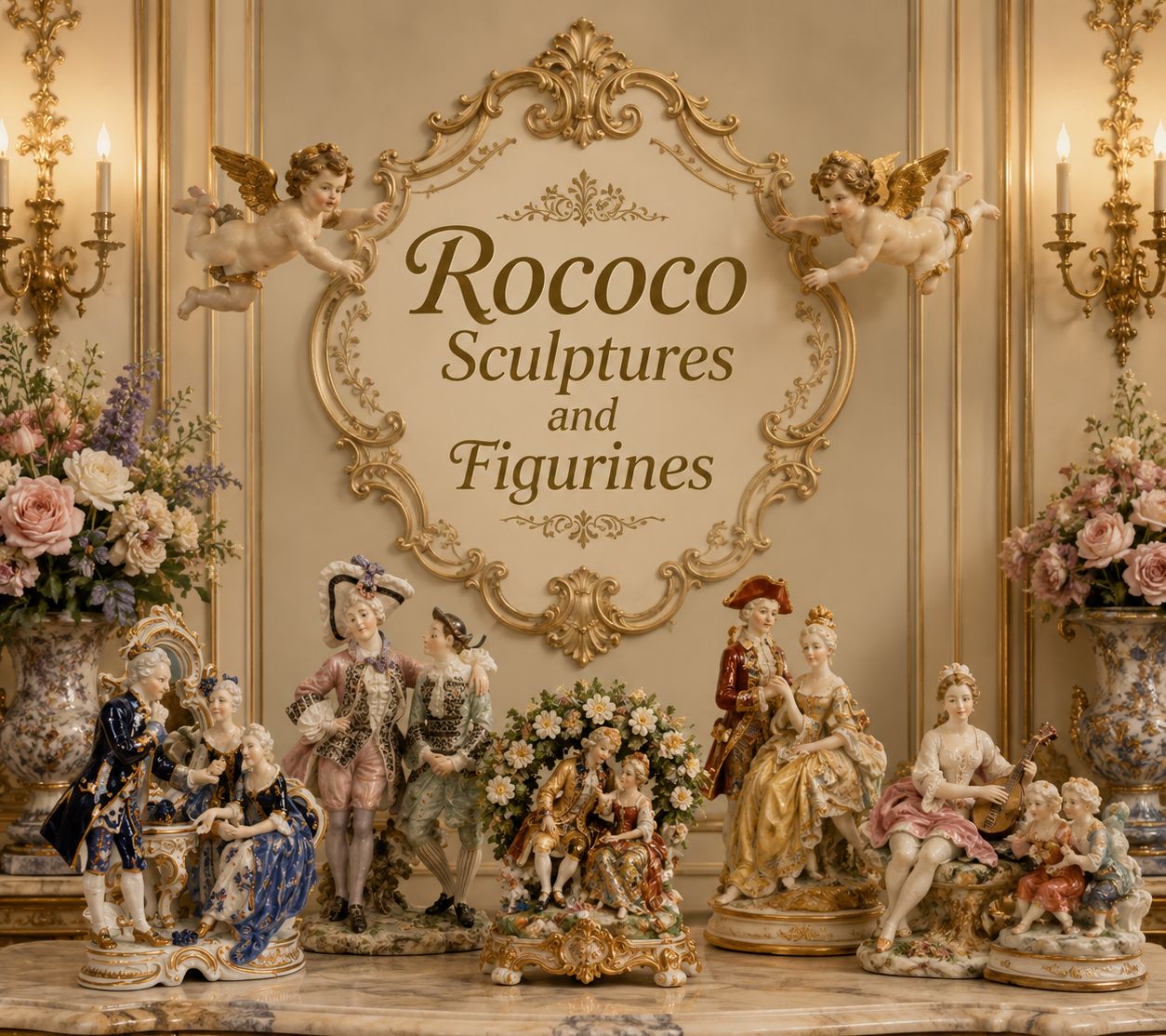
Shells, Scrolls, and Sculptures: Exploring Rococo Figurines
What comes to mind when the word Rococo is heard? Perhaps visions of elegant women in flowing gowns, gilded mirrors, ornate bronze candelabras, delicate porcelain figurines, and lavish European interiors filled with decorative excess.
For centuries, the Rococo style has been admired for its theatrical beauty, soft elegance, and playful luxury. Originating in 18th-century France, this artistic movement transformed interiors, sculpture, furniture, ceramics, and decorative arts into expressions of fantasy and refinement. Unlike the dramatic heaviness of Baroque design, Rococo embraced intimacy, fluidity, and ornamentation without restraint.
Today, Rococo sculptures and figurines are once again being appreciated. However, they are no longer confined to palaces and aristocratic salons. Instead, they are being incorporated into contemporary homes, luxury interiors, modern apartments, and curated decor collections.
In this blog, we will explore the history of Rococo style, the development of Rococo sculpture and figurines, their defining characteristics, popular types and motifs, and how these decorative treasures can beautifully complement modern interiors.
Also Read: The Whimsical World of Lladró Porcelain
What Is Rococo?
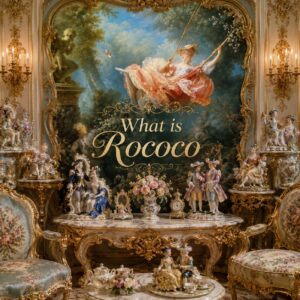
The Rococo style first emerged in France during the 1720s and 1730s.
The name Rococo was derived from the French word rocaille, meaning rocks, shells, or broken shell formations. These natural motifs became central to Rococo ornamentation and were frequently combined with floral details, marine imagery, birds, and curving foliage.
Initially, Rococo developed as a reaction against the rigid grandeur and formal symmetry associated with King Louis XIV’s Palace of Versailles and the earlier Baroque movement.
As a result, interiors were transformed with delicate curves, asymmetrical detailing, pastel colours, and whimsical decoration. Walls, ceilings, and mouldings were adorned with flowing “S” and “C” scrolls, floral garlands, shell motifs, and gilded ornamentation.
How Did Rococo Sculpture Develop?
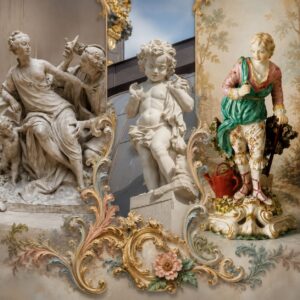
Rococo sculpture evolved alongside the decorative arts movement in France and later spread throughout Germany, Austria, and other parts of Europe.
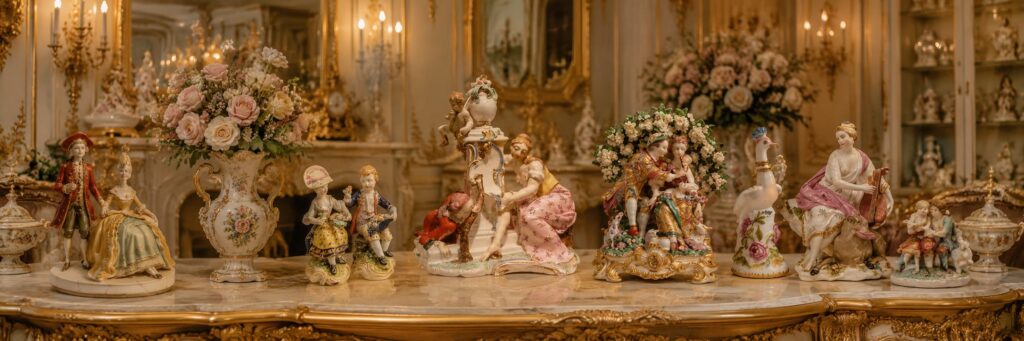
Unlike monumental Baroque sculpture, Rococo works were designed for intimate interiors rather than grand public spaces. Smaller sculptures and figurines became popular additions to salons, drawing rooms, fireplaces, dining tables, and cabinets.
At the same time, advances in porcelain production transformed decorative sculpture entirely. Renowned porcelain factories like Meissen in Germany and Sèvres in France started creating detailed figurines that depict aristocratic leisure, romance, mythology, music, and pastoral fantasy.
Characteristics of Rococo Sculptures and Figurines
- Fluidity and Curves
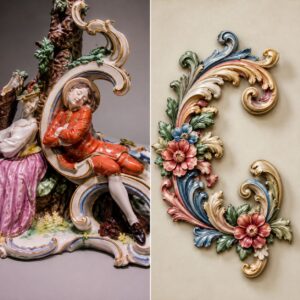
One of the defining features of Rococo sculpture is movement. Serpentine lines, flowing drapery, and asymmetrical compositions were emphasized throughout the style. “S” and “C” scrolls appeared repeatedly in bases, frames, and decorative details.
- Intimate Scale and Decorative Purpose4
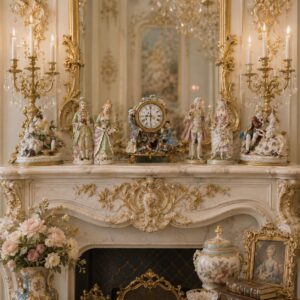
Most Rococo figurines were created for intimate spaces rather than monumental settings. Small porcelain sculptures were placed on mantels, consoles, and dining tables as decorative conversation pieces.
- Pastel Colours and Delicate Gilding
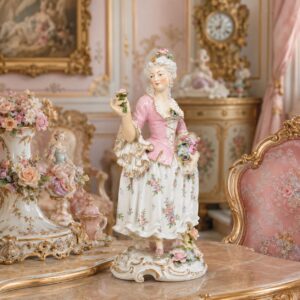
Soft pastel tones such as blush pink, pale blue, cream, mint green, and ivory were widely used. Fine gilding was often added to enhance elegance.
- Naturalistic Ornamentation
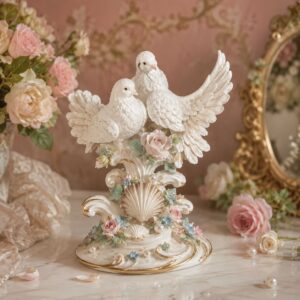
Nature played an important role in Rococo decoration. Flowers, vines, seashells, birds, leaves, rocks, and marine-inspired motifs were integrated into sculpture and decorative arts.
- Elegance and Graceful Motion
Figures were often sculpted in dancer-like poses with flowing garments and theatrical gestures. Facial expressions were soft, flirtatious, and idealized.
Key Materials Used in Rococo Sculpture
- Porcelain
Porcelain became the defining material of Rococo figurines. Meissen and Sèvres porcelain factories produced highly collectible decorative sculptures admired for their detail and refinement.
- Gilt Bronze
Gilt bronze was commonly used for candelabras, clocks, mirrors, mounts, and decorative sculpture. These pieces often featured cherubs, foliage, mythological figures, and elaborate scrollwork.
- Stucco
Stucco decoration was extensively applied to palace ceilings and walls throughout France, Germany, and Austria.
- Marble and Terracotta
Although less common than porcelain, marble and terracotta were also used for elegant Rococo sculptures and decorative busts.
Popular Types of Rococo Sculptures and Figurines
- Porcelain Figurines (Meissen and Dresden Style)
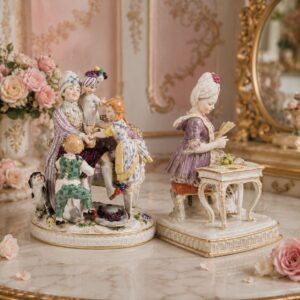
These figurines often depicted courtship scenes, dancers, musicians, aristocrats, and pastoral romance.
- Gallant Scenes
Courting couples walking through gardens or playing instruments became iconic Rococo subjects.
- Pastoral Figurines
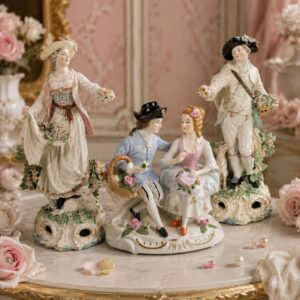
Idealized rural life was romanticized through shepherds, shepherdesses, lambs, and floral landscapes.
Shepherds, noble couples, musicians, dancers, cherubs, and mythological lovers became recurring subjects.
- Putti and Cherubs
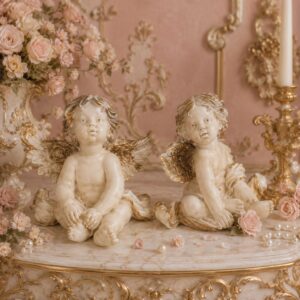
Winged infants known as putti or cherubs were frequently sculpted in playful and mischievous poses.
- Mythological Figures
Venus, Cupid, nymphs, muses, satyrs, and classical gods were often represented in Rococo sculpture.
- Chinoiserie Figurines
European fascination with East Asian art inspired whimsical Chinese-inspired figures, pagodas, birds, and decorative fantasy scenes.
- Bronze Candelabras and Decorative Objects
Gilt bronze candleholders, clocks, mirrors, and decorative mounts became highly ornate during the Rococo period.
- Animal and Bird Figurines
Exotic birds, parrots, monkeys, swans, peacocks, and small animals were integrated into decorative compositions.
Key Rococo Motifs
- Rocaille (Shell and Rock Forms)
The signature motif of Rococo, rocaille designs featured asymmetrical shell and rock-inspired ornamentation.
- Floral Garlands and Roses
Naturalistic flowers and vines were delicately sculpted and painted throughout Rococo decorative arts.
- Acanthus Leaves and Scrollwork
Flowing foliate scrolls added movement and elegance to sculptures and interiors.
- Birds and Tropical Elements
Exotic birds and tropical motifs reflected Europe’s growing fascination with global trade and distant cultures.
How Rococo Sculptures and Figurines Are Returning to Modern Decor
In recent years, Rococo-inspired decor has experienced a revival. However, it is now being styled differently. Rather than overwhelming spaces with ornamentation, contemporary interiors often use Rococo objects selectively.
Decor Tips for Styling Rococo Figurines in Contemporary Interiors
- Pair with Minimalist Furniture
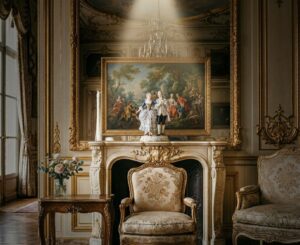
A delicate porcelain figurine can create a striking contrast when placed on sleek contemporary furniture.
- Use the “Statement Piece” Approach
Instead of displaying large collections, one or two carefully selected Rococo pieces should be highlighted.
- Create Contrast
Soft pastel figurines look particularly dramatic against matte black surfaces, industrial materials, or dark modern interiors.
- Add Character to Workspaces
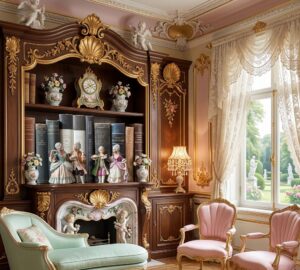
A Rococo sculpture can soften minimalist offices and home libraries by adding whimsy and elegance.
- Style Curated Vignettes
Rococo figurines can be paired with modern geometric vases, abstract art, or contemporary books for a layered look.
- Use Natural Light
Natural lighting enhances gilded details, porcelain textures, and delicate craftsmanship beautifully.
- Keep Backgrounds Neutral
White, gray, beige, or black walls allow Rococo sculptures to stand out without visual competition.
Final Thoughts
Rococo sculptures and figurines continue to captivate collectors, designers, and art enthusiasts centuries after their creation. Their elegance, movement, and decorative richness offer a striking contrast to today’s often minimal interiors.
Although the Rococo movement was once criticized for excess and ornamentation, it is now appreciated for its artistry, craftsmanship, and emotional charm.
Whether displayed as a single porcelain figurine, a gilded bronze sculpture, or part of a carefully curated interior, Rococo decor brings softness, fantasy, and timeless sophistication into modern spaces.
Giftex: A World of Collectibles Auction
This May, step into a world of antique and vintage interior decor with Giftex’s latest edition of A World of Collectibles Auction. From exquisite vintage finds to rare antique treasures, each piece has been carefully curated for collectors, design enthusiasts, and lovers of timeless craftsmanship.
Discover objects rich in history, character, and artistry, and bring home decor that tells a story. This is an event not to be missed.


About Post Author