
Why Paresh Maity’s Public Art Resonates Across India’s Luxury Hubs
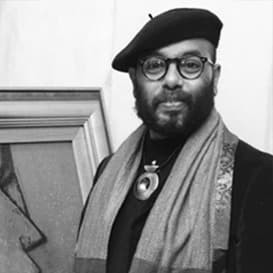
Paresh Maity
Paresh Maity, a name that resonates with vibrancy and creativity, stands as one of India’s most celebrated contemporary artists. With a career spanning over three decades, Maity’s work is a testament to his extraordinary ability to infuse life into his canvases through bold colours, dynamic forms, and evocative themes.
A versatile Indian artist, Maity excels in mastering watercolour, oil, ceramics, and monumental sculptures.
He has achieved proficiency in various art mediums including painting, video and sculpture. The colours are vibrant and echo the passion of the artist. The sand dunes of Rajasthan, the backwaters of Kerala, the canals of Venice, and Maity’s works have captured it all.
Known for his large-scale public artworks and vibrant depictions of India’s cultural landscape, Paresh Maity’s monumental public art resonates across India’s luxury hubs such as international airports, premium malls, and high-end hotels.
His art seamlessly blends India’s rich cultural heritage with modern, globally appealing aesthetics. His grand-scale sculptures and murals act as iconic focal points that elevate the spatial experience for an elite demographic.
Today, his artworks are housed in major museums, institutional collections, and private collections worldwide.
The renowned artist Paresh Maity was born in the historical town of Tamluk, close to Kolkata, in 1965. After studying at Hamilton High School, he earned his Bachelor’s Degree in Fine Arts from the Government College of Arts and Crafts, Kolkata. This was followed by a Master’s Degree in Fine Arts from the College of Art, New Delhi.
Maity’s art spans various media, including painting, sculpture, photography, and installation art. His early watercolours showcased his skill in capturing light and shade, while his later works in oils, acrylics, and mixed media highlight his evolving style. Vibrant colours and diverse themes, from serene landscapes to abstract forms, characterize his work.
Art Themes and Style
Paresh Maity’s art often explores themes of travel, memory, light, and human emotion. The artist’s ability to weave contemporary realities into historical and sacred landscapes remains one of the defining strengths of his practice.
As Paresh Maity’s artistic journey evolved, he transitioned to oil paints and mixed media, broadening his stylistic approach. His travels across the country and around the world have enriched his visual vocabulary, resulting in works that combine observation with imagination.
• Colour: Whether depicting the ghats of Varanasi, the deserts of Rajasthan, coastal landscapes, or abstract compositions, colour becomes a vehicle for expressing mood and energy.
• Water: Water remains a recurring motif in many of his works. Rivers, oceans, reflections, and boats frequently appear as symbols of movement, transformation, and continuity.
• Spirituality and Human Connection: Equally important is his exploration of spirituality and human connection. Rather than depicting religion directly, Maity often captures the emotional and cultural experiences associated with sacred spaces and collective memory.
• Sculptures and Installations: In his sculptures and installations, these themes take on a new dimension. Forms become larger, more immersive, and often interactive.
The Rise of Public Art in Luxury Spaces
Across India, luxury developments have increasingly embraced public art as an essential component of placemaking. Airports, hospitality destinations, commercial districts, and premium residential projects now use large-scale artworks to create memorable experiences and cultural identity.
Unlike traditional gallery spaces, public art must communicate with audiences who may not possess formal knowledge of art. It needs to be visually compelling, emotionally engaging, and culturally relevant. Few contemporary Indian artists have succeeded in this realm as effectively as Paresh Maity.
His works possess a universal appeal while remaining deeply rooted in Indian culture. They celebrate local traditions without appearing nostalgic and embrace modernity without losing their emotional resonance.
Public Art Of Paresh Maity
Padma Shri artist Paresh Maity transforms Noida International Airport into a cultural gateway through monumental paintings and immersive installations that celebrate the heritage, spirituality, and artistic traditions of Uttar Pradesh, redefining the role of public art within contemporary Indian infrastructure.
• Indian Odyssey: Transforming Airport Art
One of India’s most recognised public artworks by the contemporary artist, Maity, can be found at Terminal 3 of Delhi’s Indira Gandhi International Airport. Considered as one of his most significant public art achievements, the ‘Indian Odyssey’ is an 850-foot-long mural that traces a visual journey through India’s landscapes, monuments and festivals, from Bengal and Assam to Rajasthan, Kerala and Kashmir, among others.
Airports are often associated with movement, waiting, and anonymity. Through this expansive mural, Maity introduces warmth, identity, and storytelling into the environment.
• Reimagining Terminal 1 Through Sculpture
In 2024, Paresh Maity further expanded his contribution to Delhi’s airport landscape through a series of installations at the newly expanded Terminal 1 of Indira Gandhi International Airport.
At Terminal 1, his installations include Sound of Silence, a sculptural work that brings together around 4,500 brass and copper bells to create a human form. Bells have long occupied an important place in Indian cultural and spiritual traditions, and Maity transforms this familiar object into a contemporary sculptural statement.
Another prominent installation, Life’s Journey, features a pair of fibreglass white elephants adorned with vibrant colours and intricate detailing. The elephant, a symbol of wisdom, strength, and prosperity in Indian culture, becomes a celebratory emblem within the airport environment.
• Global Recognition Through Monumental Sculpture
Maity’s public art extends beyond India. His sculpture Genesis was exhibited at Marinaressa Gardens, Riva dei Sette Martiri, Venice, placing his work within one of the world’s most important international art destinations.
Why His Art Resonates
The success of Paresh Maity’s public art lies in its ability to operate on multiple levels simultaneously.
Visually, his works command attention through scale, colour, and craftsmanship. Emotionally, they evoke curiosity, nostalgia, wonder, and reflection. Culturally, they celebrate Indian identity while remaining accessible to global audiences.
His work fits perfectly into these premium spaces for several key reasons:
• Bridging Heritage and Modernity
Maity combines indigenous Indian motifs (like the rivers of Bengal, the ghats of Varanasi, or traditional village life) with universal abstract and contemporary forms. This gives luxury properties, which often risk looking generic or westernized a distinctly localized, yet highly sophisticated Indian identity.
• Monumental Scale and Precision
His pieces, such as the 800-foot mural The Indian Odyssey at the Indira Gandhi International Airport in New Delhi or his massive bronze installations, are statement pieces. They inherently possess the gravitas, scale, and high production value expected in elite, design-centric environments.
• Focus on Light and Vitality
Paresh Maity’s signature style is deeply rooted in the interplay of luminous light, fluid movement, and vibrant colour. These elements project a sense of optimism, energy, and elegance, which perfectly complements the mood of premium spaces and hospitality venues
Final Thoughts
Paresh Maity has redefined the role of contemporary art within India’s public and luxury spaces. From the monumental Indian Odyssey mural at Delhi Airport to sculptural landmarks such as Sound of Silence, Life’s Journey, and Genesis, his works demonstrate how art can enrich everyday experiences while celebrating cultural identity.
As India’s luxury hubs continue to evolve, the demand for meaningful public art is likely to grow. Few artists are better positioned to meet this moment than Paresh Maity.


About Post Author