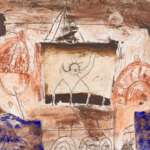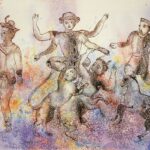
Exploring Surrealism & Psychological Depth in Bikash Bhattacharjee’s Paintings
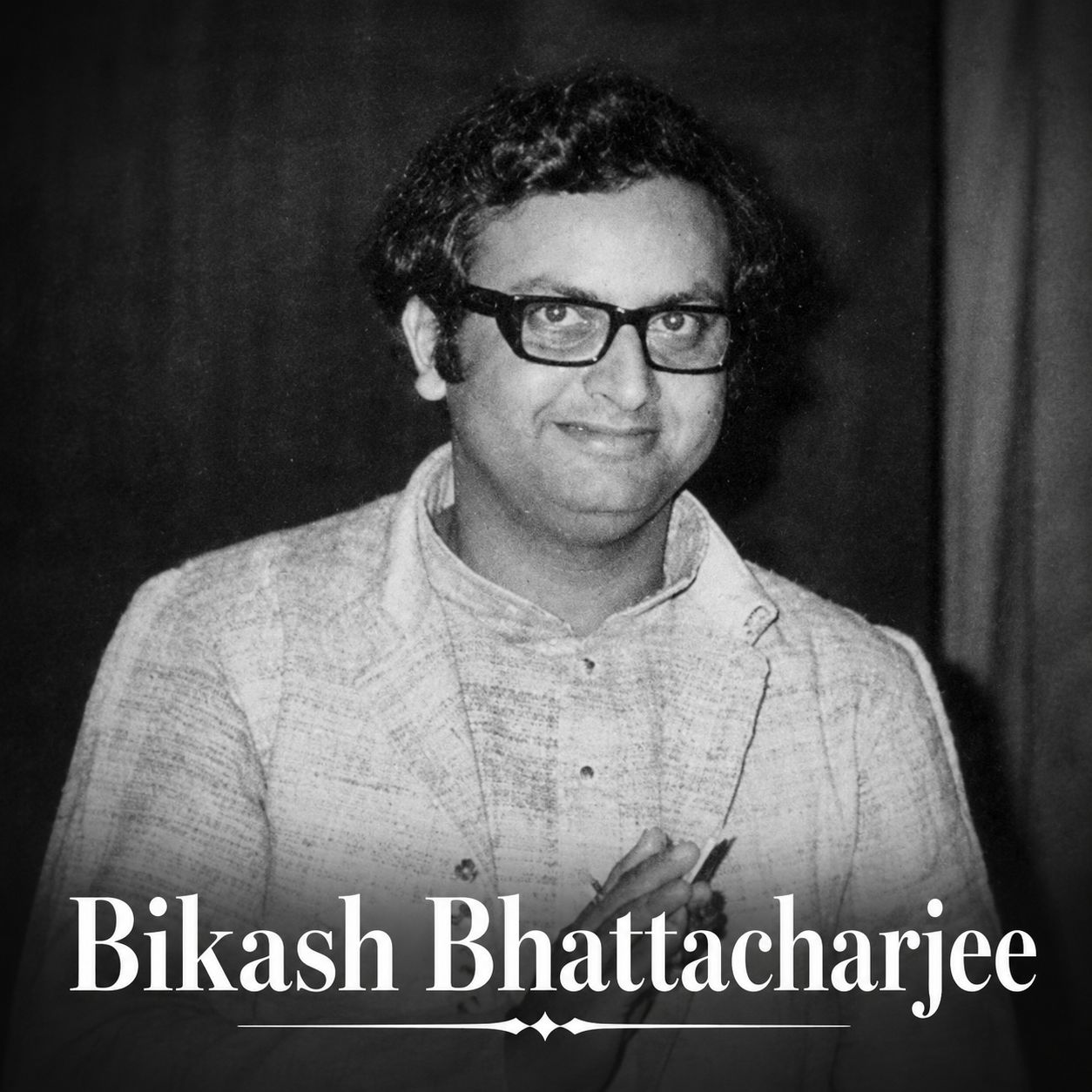
Bikash Bhattacharjee (21 June 1940 – 18 December 2006), an iconic figure in the world of Indian art, is celebrated for his mastery of realism and surrealism.
When you gaze at his paintings, at first, it seems like it stepped out of a horror or psychological story. It’s only when you look at it closely that you realise the emotion and the story it tells.
Born in Kolkata, West Bengal, Bikash Bhattacharjee’s art reflected the socio-political landscape of post-independence India.
Known for his ability to capture emotions and societal narratives with extraordinary precision, Bhattacharjee remains a towering presence in the history of modern Indian art.
In this blog, we try to explore and understand the surrealism and psychological themes in some of his most prominent works.
Also Read: The Folk Art Legacy in Arpana Caur’s Paintings
Early Life
Bikash, born in 1940 in Kolkata, lost his father when he was just six years old. He then came to live with his widowed mother in his maternal uncle’s house. Bikash Bhattacharjee grew up in Kolkata during a period of significant socio-political upheaval.
Losing his father at a young age, he experienced financial hardships that deeply influenced his outlook on life. These challenges shaped his sensitivity towards the struggles of the common people, which later became a recurring theme in his work.
From a young age, Bhattacharjee displayed an innate inclination toward drawing and engaging in self-directed sketches.
Seeing the sufferings of women so closely had a deep impact on his psyche. Hence, most of his paintings carry the pain and suffering of women.
Artistic Training and Formative Years
Bikash Bhattacharjee pursued formal artistic education at the Indian College of Art and Draftsmanship in Kolkata, graduating in 1963 with a Diploma in Fine Arts. His teacher, Arun Bose played an important role in developing his artistic motivations.
Inspiration and Influences
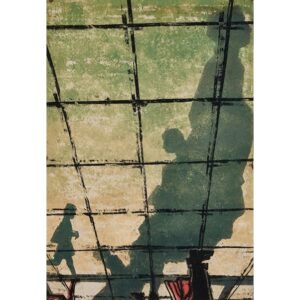
Bhattacharjee drew inspiration for his work from his early dreary days, where vivid images of his struggling – the crumbling walls of buildings and the multitudes of people living there – wove a certain magic in his mind.
In his entire twenties, he saw the cityscapes filled with asphalt streets, brick and mortar buildings that looked absolutely desolate. He portrayed the dark and damp alleys, desolated environment in his paintings in an unseeming arrangement of scales, space, and chromatic values.
Influences
- Rembrandt and Goya Influences
Bikash studied a lot of artists back then, but Rembrandt and Goya inspired him most, which is why the artist’s painting technique resembles theirs.
- Hans Bellmer Influences
The entire Bikash Bhattacharjee Doll series was inspired by Hans Bellmer, when the doll actually took the place of a human emotion in a sinister way. Though Bikash didn’t use life-sized dolls like Hans Bellmer, he used children’s dolls in alienated valleys and domestic settings with an uncanny emotion.
- An Influence of Surrealists, Freud, and More
Surrealism is about capturing the visual imagery from the subconscious mind to create art without any intention to sort through logical comprehensibility.
Bikash used to study Dalí for his works and the Surrealist movement closely, so his artworks are influenced by them.
Art Style of Bikash Bhattacharjee.
- Technical Mastery and Realism
Bhattacharjee’s technical prowess is evident in his hyper-realistic rendering of textures, such as the subtle gradations of human skin and the intricate folds of fabrics, achieved through meticulous fine brushwork and precise control of light and shadow contrasts.
- Oil Paintings
Employing oil paints, Bhattacharjee built layered depth through glazing techniques reminiscent of Renaissance masters, allowing for translucent overlays that enhanced luminosity. This method facilitated photorealistic effects, as seen in his detailed portrayals of human figures.
- Surrealist Elements and Symbolism
Bhattacharjee’s surrealist elements manifest as precise anatomical distortions, including eyeless faces and subtly elongated forms, which function as controlled deviations from photographic realism to amplify perceptual tension.
Themes and Symbols
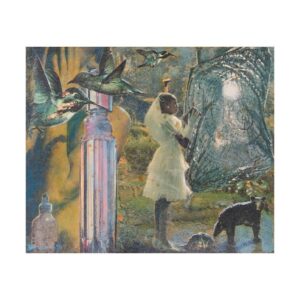
While Bikash Bhattacharjee is quite often classified as a realist, his works delved much deeper into the emotional and psychological landscapes of his subjects.
- Realism with Social Commentary
His paintings often depicted the struggles of the urban middle class and the marginalized. Works like The Rickshaw Puller showcased the resilience of the working class.
- Women as Central Figures
The woman is the recurrent central motif in nearly eighty per cent of Bikash’s works. The women he painted came from different social strata and the red-light areas, but mostly belonged to the middle class.
- Surrealism and Mystery
- Birth of Surrealism and Freud
Often regarded as the father of psychoanalysis, Sigmund Freud was the first to propose that dreams could reveal aspects of the mind that lie beyond conscious awareness. In The Interpretation of Dreams (1899), Freud outlined how the unconscious remains active during sleep, producing dreams that may elude memory upon waking.
Rather than rejecting reality altogether, the Surrealists sought to uncover its deeper, hidden layers—those found within the unconscious mind.
- Surrealism In Bikash Bhattacharjee’s Paintings
Instead of floating clocks or abstract landscapes, Bhattacharjee’s surrealism was deeply grounded in local reality. He used hyper-realistic painting techniques to depict mundane items, then introduced a “surrealist twist”. By distorting human anatomy, fusing youth with old age, or placing inanimate objects in illogical, eerie scenarios, he forced viewers to question their perceived reality and look beneath the surface.
- Political and Cultural Reflections
During the turbulent times of the 1970s in West Bengal, Bhattacharjee’s art became a voice for the disenfranchised. His work reflected socio-political unrest, poverty, and the human cost of change.
- Psychological Themes
Bhattacharjee was a master of psychological tension, exploring the subconscious anxieties of the human condition.
- Isolation and Mental Unrest: Capturing emotionally conflicted figures dealing with internal struggles and societal oppression.
- Subverted Power Dynamics: Exploring the fragility of individuals against harsh socio-political backdrops.
- Women’s Vulnerability and Grace: Portraying women as deeply complex psychological presences trapped between domesticity, desire, and societal scrutiny.
Famous Paintings & Series
Some of Bikash Bhattacharjee’s most celebrated works include:
- The Durga Series: Instead of painting the Hindu goddess Durga in her traditional, idealized mythological form, he depicted her with the features of ordinary, struggling Bengali women. These paintings depicted the goddess Durga with a unique blend of realism and mysticism, reflecting the cultural ethos of Bengal.
- The Doll Series: Bikash conceived the Doll series against the backdrop of a time when Kolkata was undergoing immense political violence (Naxal movement). Bikash witnessed some of the most gruesome killings in those clashes. These hauntingly surreal works featured lifelike dolls, symbolizing innocence and hidden fears.
- Portraits of Women: His portraits captured the multifaceted nature of Indian women, portraying their beauty, strength, and vulnerability.
Legacy and Influence
Bikash Bhattacharjee’s influence on Indian art is profound. His ability to tell stories through hyper-realistic imagery set him apart from his contemporaries. By addressing societal issues and human emotions, he created art that was not only visually striking but also thought-provoking.
The Timeless Appeal of Bikash Bhattacharjee’s Art
Bikash Bhattacharjee passed away on December 18, 2006, but his art continues to captivate audiences. His ability to weave realism with the complexities of human life ensures his place as one of India’s greatest artists. For those discovering his work, Bhattacharjee offers a window into the soul of a society grappling with change, resilience, and hope.
This enduring psychological resonance is what makes his art timeless, ensuring that future generations will continue to find meaning and inspiration in his remarkable body of work.
Giftex: Modern Indian Art Auction
This June, Giftex returns with its celebrated Modern Indian Art Auction. From iconic modern masterpieces to contemporary classics, discover exceptional works that bring colour, character, and creativity into your collection. Don’t miss this opportunity to acquire remarkable art.


About Post Author