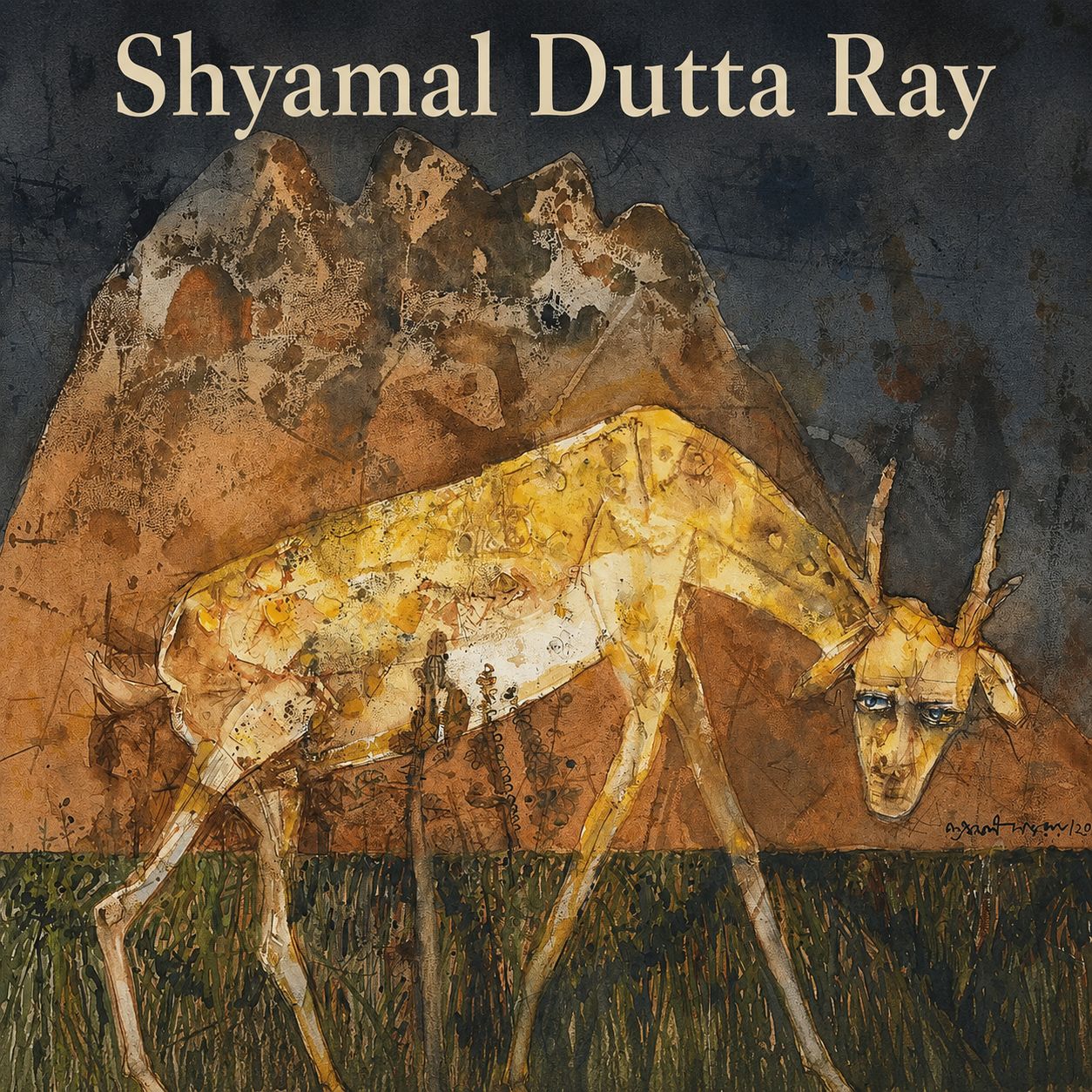
Why Shyamal Dutta Ray Is Considered One of India’s Greatest Watercolour Masters
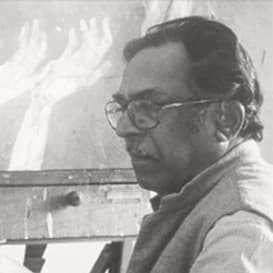
Shyamal Dutta Ray
Among the most accomplished watercolourists of modern India, Shyamal Dutta Ray holds a prominent position. His contribution to establishing watercolour as a significant medium made him a defining pillar of contemporary Indian art.
What makes Shyamal Dutta Ray one of India’s greatest watercolour masters is not merely his technical excellence. Rather, it is his ability to combine personal experiences, social realities, and artistic innovation into a visual language that remains relevant decades later.
In his words, “The imagery in my paintings comes mostly from personal experiences. It is the visual world and its influences on me that I try to reveal on my canvas.”
This deeply personal approach, combined with his remarkable mastery of technique, secured his place among the most influential figures in modern Indian art.
Early Life
Shyamal Dutta Ray was born in Ranchi, Bihar (now Jharkhand), in 1934. His formative years coincided with some of the most turbulent periods in Indian history. During the Second World War, he, along with his family, shifted out of Calcutta and went to their home in Mymensingh. When the panic due to the war had subsided, the family returned to Calcutta in 1942.
Experiencing firsthand, the Bengal famine left a profound impact on his psyche, causing themes of hunger and extreme deprivation to haunt his paintings for years afterwards.
Shyamal Dutta Ray started painting while he was a young boy. He matriculated in 1949 and realised that the only life open to him was the life of a painter, and joined the Government College of Art and Crafts, Calcutta.
There, he received formal training while simultaneously developing an artistic voice that would eventually distinguish him from his contemporaries.
Struggles and Influences
Like many painters of his generation, Shyamal Dutta Ray also wavered between frustrated dreams and hopeful expectations. After passing out from the art college, like others from his generation, the young Shyamal faced the struggle for existence. He worked as an illustrator, book cover designer, and art teacher to make ends meet.
The Turner Influence
The great British watercolourist J.M.W. Turner (1775–1851) indirectly shaped Ray’s handling of pigments.
He explored the superlative use of watercolour in Turner’s paintings. He learnt to use light and shadows to create a sense of depth that eventually became a hallmark of Ray’s paintings.
Watercolour Mastery
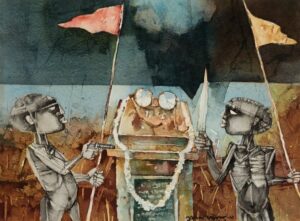
Shyamal Dutta Ray Painting
Interestingly, Shyamal Dutta Ray did not begin his artistic journey as a watercolour specialist. Like many painters of his generation, he initially worked extensively with oil paints.
However, Dutta Ray suffered from severe ill-health while growing up, which impacted his life and art tremendously. He had to give up oil paints as he was allergic to them.
What initially appeared to be a setback ultimately became a defining turning point in his career.
Unable to continue with oils, Ray turned his attention to watercolour. Instead of treating it as a substitute, he embraced its possibilities and began experimenting extensively with its properties.
As a result, watercolour became not merely his preferred medium but his artistic identity.
Why Watercolour Became His Signature Medium
One of the most important reasons Shyamal Dutta Ray is considered a master is his ability to give watercolour a new identity. Traditionally, the Bengal School of Art had used soft, luminous, and fluid colour palettes. Watercolour in that context was often associated with gentleness and restraint.
Shyamal Dutta Ray elevated watercolour in Indian art by transforming it from a delicate, light medium into a tool for weighty, psychological expression.
• Technical Shift: Unlike the light, transparent, diluted washes traditionally used by the Bengal School for landscapes, Dutta Ray applied multiple layers of saturated, opaque hues. This allowed him to create the depth, richness, and density usually reserved for oil paintings.
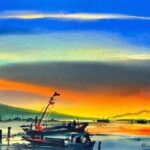
• Theatrical Play of Light: He was heavily influenced by the English master J.M.W. Turner. By layering transparent watercolours, he achieved results that were dramatic and moody.
• Texture and Form: Rather than using the paper merely as a blank white foundation, he integrated the texture of the paper with dense pigments to give his subjects a tangible, sometimes surreal, and deeply textured feel.
A Turning Point in Bengal School Traditions
Ray’s body of work constitutes a major turning point in the history of the Bengal School of Art.
Monumentalizing the Mundane: Before Dutta Ray, watercolour in the Bengal School was often reserved for romanticized or mythical scenes. He used it to depict the harsh, contradictory realities of Calcutta—poverty, urban alienation, decay, and existential struggle.
Breaking the “Fragility” Stigma: He proved that watercolours could withstand massive emotional and psychological weight. His works —like Chair Crown or the “Broken Bowl” series tackling the Bengal Famine—were full of wit, satire, and somber existential reflection, demonstrating that the medium could carry heavy, serious socio-political narratives.
Style and Themes
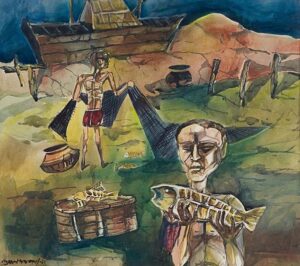
Shyamal Dutta Ray Artwork
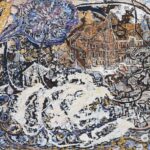
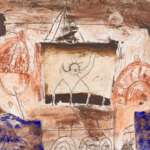
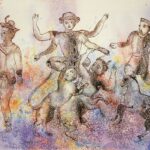
Shyamal Dutta Ray developed a powerful style defined by a sombre, saturated palette and dense compositions that convey psychological depth and the contradictions of urban life in Calcutta.
His paintings often explore deprivation, solitude, stillness, and the emotional residue of social reality.
The viewer senses that the surface holds more than what is immediately visible. This layered quality gives his work a lasting relevance.
Rejecting the traditional lightness of watercolour, he used the medium with intensity and emotional weight, blending personal introspection with social awareness.
For his honest, though not brutal, depiction of the human condition, he struck a chord with one and all, winning admirers and accolades in equal measure.
Why Shyamal Dutta Ray Still Matters Today
Shyamal Dutta Ray continues to matter because he demonstrated that watercolour could be as intellectually and emotionally serious as any other medium. His legacy is not only technical but also philosophical. He showed that an artist could draw strength from restraint, and that quiet images could carry immense force.
For collectors, students, and admirers of Indian art, his work offers several lessons.
First, it proves that the medium is never secondary to the message.
Second, it shows that personal memory can become universal when handled with honesty and discipline.
Third, it reminds us that innovation does not always require dramatic rupture; sometimes it comes through deepening a tradition from within.
Final Thoughts
Shyamal Dutta Ray is considered one of India’s greatest watercolour masters because he gave the medium new emotional and artistic authority. He created a special technique in watercolour, which was considered a minor medium until then.
He demonstrated that watercolour could be not only the medium for landscapes and preparatory sketches for later paintings, but also one that could bring a high degree of seriousness and depth if used properly.
From his early years in Ranchi and Calcutta to his lasting contribution to the Bengal School’s evolution, Ray’s journey is a testament to artistic courage. He redefined what watercolour could express, and in doing so, secured his place as a major figure in contemporary Indian art.


About Post Author